What Congolese Refugees in Burundi Need Right Now
And How You Can Help
Somewhere in eastern Burundi, a man named Michel sleeps without shelter. He is old. He arrived at the Busuma refugee site on January 9, 2026, carrying nothing—because the war took everything else, including his wife and four of his children.
“We’ll be killed by the cold and hunger,” he said. “And as an old person, I can no longer fight for food to avoid being beaten.”
Michel is one of more than 200,000 Congolese refugees now living in Burundi—and his situation is not unusual. This is what the crisis in eastern DRC looks like when it lands on the ground in a neighboring country that was already struggling.
This post tells the story of what’s actually happening at Busuma, and what ADRA is doing about it.
Understanding Burundi: A Country Already Stretched Thin
Before you can understand what the refugees at Busuma are facing, it helps to understand where they’ve arrived.
Burundi is a small, landlocked country in the heart of Africa—about the size of the US state of Maryland—with a population of roughly 14 million people. It’s one of the most densely populated countries on the continent, and one of the poorest. Nearly nine in ten people live below the poverty line. About 85% of the population works in agriculture, mostly subsistence farming, meaning families grow just enough to feed themselves—if the rains come, if the soil holds, if prices don’t collapse.
Food insecurity is already chronic here. According to the Integrated Food Security Phase Classification, 43% of Burundi’s population suffers from food insecurity. Climate change is making that worse: erratic rainfall, soil erosion, and rising temperatures are chipping away at harvests that families depend on entirely.
This is the country that has opened its doors to Congolese refugees. It’s a remarkable act of generosity from a nation that is, by most measures, already at its limit.
A Refugee Crisis That Doubled Almost Overnight
By early 2026, Burundi was hosting nearly 200,000 Congolese refugees—a number that roughly doubled during 2025 as conflict in eastern DRC intensified and triggered a massive wave of displacement.
Around 67,000 of those refugees are concentrated at the Busuma site alone.
That’s not a statistic to scroll past. Busuma is a single refugee site in the Kayongozi zone of Ruyigi commune, Buhumuza Province. Sixty-seven thousand people. In one place. Many of whom arrived with nothing, after fleeing bombs and armed groups, often after losing family members to the violence.
Burundi has maintained what UNHCR calls an “open-door policy”—continuing to welcome asylum seekers even as funding gaps widen and needs outpace the response. That’s worth acknowledging. It’s also worth knowing that 40% of refugees in Burundi live in urban areas, with the rest hosted in five camps in the eastern and northeastern regions, where access to services is harder and visibility lower.
Who Are the People at Busuma?
The Busuma site is where ADRA has been working. The people there are Congolese refugees—most of whom fled eastern DRC, where armed conflict has been displacing communities for years. They didn’t pack bags. They didn’t plan a route. They ran.
When they arrived, they found themselves in a sprawling site without adequate shelter, water, food, or sanitation. Children slept in the cold. Women went days without the ability to wash during their periods. Elderly people and people with disabilities had no one to advocate for them in food lines—and were sometimes beaten trying to access basic meals.
A young boy named Daniel Denis, from the village of Gatogota near Ruvungi, put it plainly:
“We children are surviving by the cold and the constant search for water. We came here leaving behind our notebooks, uniforms, and everything else. We are truly miserable. Please build us schools and youth centres.”
No child should have to ask for that.
What ADRA Did: A Distribution That Mattered
On January 26, 2026, the ADRA Burundi team arrived at Busuma as part of a coordinated emergency response alongside UNHCR, World Vision, Tearfund, StartFund, Help Channel, and Terre des Hommes.
ADRA Burundi has been operational in the country since 1981—over four decades of working alongside Burundian communities through resettlement, food security, health, education, and peacebuilding programs.
The team that showed up at Busuma wasn’t starting from scratch. They had established relationships with local government, a signed agreement with the Government of Burundi, and field offices positioned to mobilize quickly.
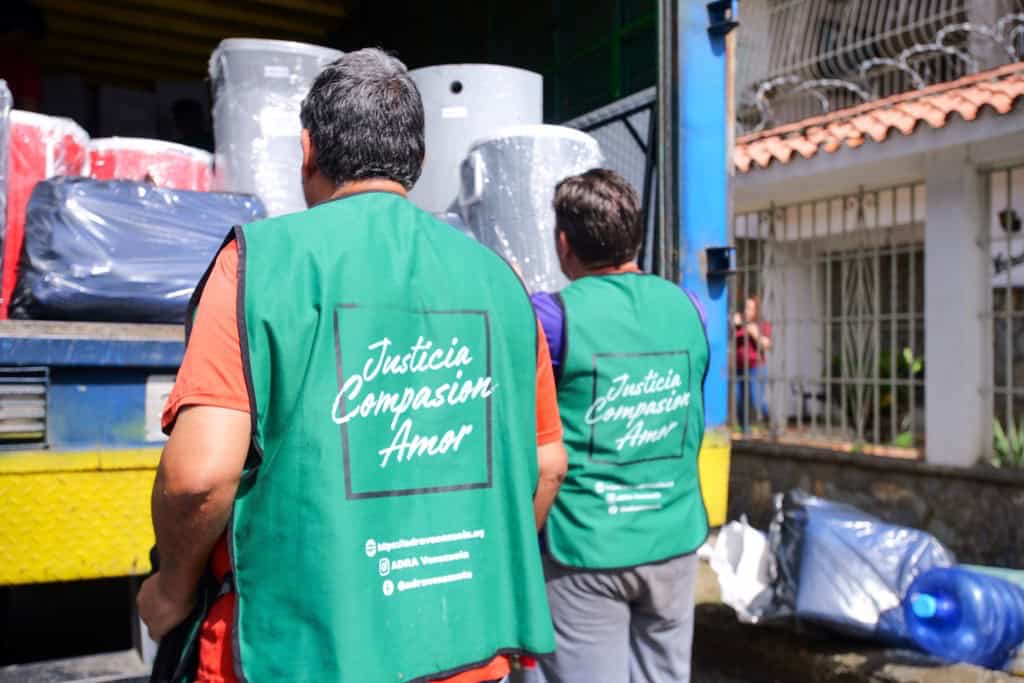
ADRA’s contribution to the January distribution covered 2,000 households and included:
2,000 jerrycans for water storage
2,000 basins
6,000 buckets
20,000 bars of soap
These aren’t glamorous items. But for families who had been unable to store clean water or maintain basic hygiene since fleeing their homes, they were a lifeline.
A father named Saidi Mitela, who received supplies that day, spoke directly to the ADRA team: “We are truly grateful for the clean water storage kits and washing soap you just gave us, because we were quite torn.”
Then he used these words to describe ADRA: “ADRA Jenga,” which means ADRA who builds.
That phrase says something important about how communities experience real humanitarian work. Not a handout. A foundation.
What's Still Missing
Honest humanitarian work means saying what one distribution didn’t fix.
The people at Busuma were clear about what they still need, and their voices deserve to be heard directly:
Shelter. Children are sleeping on the ground in the cold and rain. Vumilia Maonesho, a mother of two, asked: “Please build us shelters, because we are surviving without a place to sleep. Please provide us with mattresses, food, and cash.”
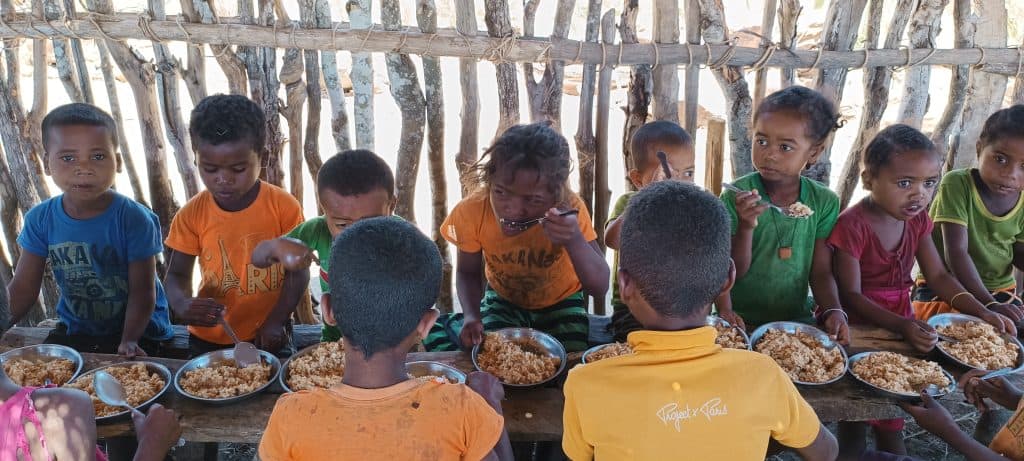
Food security. Saidi Mitela asked for continued food support, noting that exposure to the elements is already causing illness. Daniel Denis described children being beaten by police for trying to access a hot meal.
Medical care. Michel mentioned a man at the site walking with a bullet still lodged in his leg, with no idea where his wife and children are.
Menstrual hygiene. One woman’s testimony was direct: women at Busuma regularly go an entire day without being able to wash during menstruation because water is too scarce and there’s no privacy.
Drinking water infrastructure. The current water source requires long trips to fetch. That burden falls largely on children, who are already exhausted.
Education. Multiple children at the site have been out of school since fleeing. Learning has stopped entirely.
These aren’t edge cases. They’re daily life for tens of thousands of people.
Why the Burundi Refugee Crisis Demands Attention
Crises like this one tend to get a moment of visibility and then fade from the news cycle. The DRC conflict keeps generating displacement. The needs at sites like Busuma don’t pause while the world’s attention moves on.
Burundi is a country where 43% of its own people face food insecurity, where most families live on subsistence farming, and where the economy generates some of the lowest per capita incomes on earth. And yet it keeps its doors open.
Michel arrived at Busuma in January. The distribution reached him in late January. The gaps—shelter, food, medicine, education—remain open months later.
The distance between a crisis and a response is exactly where sustained, on-the-ground organizations do their most important work. And it’s where your support makes the most difference, not just in peak awareness moments, but in the long months that follow.
How ADRA Burundi Approaches This Work
ADRA Burundi’s response at Busuma reflects more than four decades of accumulated trust in this country. A few things set that approach apart.
Depth of presence. ADRA Burundi has a head office in Bujumbura and field offices across the country, with formal partnerships with Burundi’s Ministries of Education, Agriculture, Public Health, and Solidarity. This isn’t an organization parachuting in. It’s an organization that was already there.
Speed in crisis. Emergency NFI distributions like the January response are designed to reach displaced families in the acute phase of a crisis — before health and sanitation conditions deteriorate beyond recovery.
Multi-agency coordination. The Busuma distribution involved six other organizations. That kind of coordination avoids duplication, extends reach, and builds the local response infrastructure that a crisis of this scale actually requires.
Listening as a practice. The stories from Busuma are hard to read. ADRA’s field teams heard them, recorded them, and brought them back. The families at Busuma named what they need. That list becomes the roadmap for what comes next.
You're Part of This Story
As of the date this article was published, Michel is still at Busuma. So is Daniel. So is Vumilia, and her two children, and the man walking with a bullet in his leg who doesn’t know where his family is.
Their story doesn’t end with a news cycle. The Congolese refugee crisis in Burundi is ongoing—and so is ADRA’s response. But that response depends on people like you choosing to stay engaged past the moment of awareness.
A gift to ADRA today funds emergency distributions, supports field teams with decades of on-the-ground experience, and helps ensure the next family to arrive at a site like Busuma finds water, soap, and someone who showed up ready to help.
FAQ: Congolese Refugees in Burundi
What is causing the refugee crisis in eastern DRC?
The eastern Democratic Republic of Congo has experienced decades of armed conflict involving multiple armed groups, fueling cycles of displacement that have intensified significantly since 2024. Communities flee with almost no warning, often losing family members in the process. By early 2026, the DRC crisis had pushed Burundi’s refugee population close to 200,000—roughly double what it was a year earlier.
How many Congolese refugees are in Burundi right now?
By early 2026, Burundi was hosting nearly 200,000 Congolese refugees, with approximately 67,000 concentrated at the Busuma site alone. Burundi has maintained an open-door asylum policy despite being one of the world’s poorest countries.
What are non-food items (NFIs) in humanitarian relief?
Non-food items are essential household supplies distributed in emergencies—water containers, soap, blankets, cooking supplies. They’re not food, but often just as urgent. Without jerrycans, a family can’t safely store water. Without soap, disease spreads fast in crowded sites. They’re the basics that make survival possible.
How can I help Congolese refugees in Burundi?
Donating to organizations with established, on-the-ground operations is the most direct way to help. Funds support emergency distributions, field staff, and longer-term programs in shelter, food security, health, and education. Even modest donations aggregate into meaningful relief when pooled through an organization already positioned to deploy them. You can donate here to help support ADRA’s emergency response work.
How long has ADRA been working in Burundi?
ADRA Burundi has been operational since 1981—over 40 years. During that time, the organization has worked across the country in food security, health, education, peace and reconciliation, and humanitarian assistance. It holds a formal government agreement and active partnerships with multiple Burundian ministries, which allows it to respond quickly and operate with local credibility.
Author | ADRA International w/ ADRA Burundi
Photo Credit | ADRA Burundi