Twenty years ago, in 2004, the Asian tsunami forced the entire humanitarian sector, including ADRA, to ask difficult questions. How prepared were we for a major disaster? Did we coordinate effectively? Did we have shared systems and skills that worked across ADRA’s regions when conditions deteriorated rapidly?
In the aftermath, ADRA conducted a formal After Action Review (AAR) that brought together the global Network. The review acknowledged both shortcomings and important successes and resulted in a clear commitment to invest more seriously in preparedness, not only response. That commitment marked the beginning of the Emergency Response Team (ERT) program.
From Tsunami Response to Network Learning
Robert Patton initially led ADRA’s response to the tsunami in Indonesia and later transitioned to the ADRA Asia Regional Office, where he coordinated the broader tsunami response across Asia. Approximately nine months after the disaster, he led the Network-wide After Action Review convened in Thailand. Leaders from across ADRA came together to reflect honestly on lessons learned and to agree that the Network needed to do better, while also recognizing areas of strong performance.
Following that review, the Network asked Patton to develop a structured emergency response training program based on the practical learnings from ADRA’s collective tsunami response. This request directly led to the creation of the ERT program.
The First ERT Training
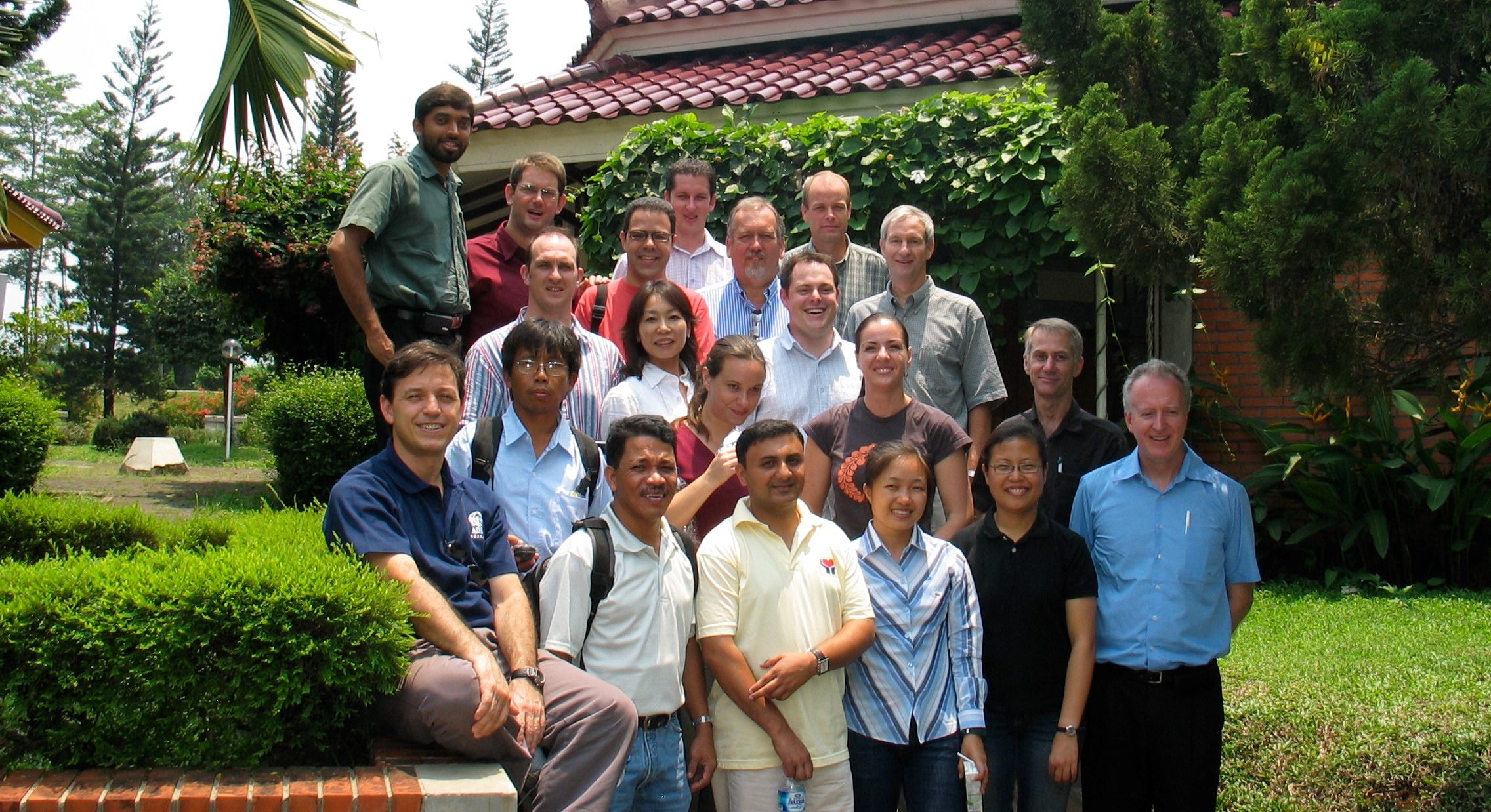
ADRA’s first ERT training was held in Indonesia in October 2006. It was designed and delivered by Robert Patton and built around a simulated volcanic eruption and mass displacement scenario. The training emphasized practical, hands-on learning and strong engagement with local communities and first responders. It relied on simple tools and emerging humanitarian standards, many of which would not be formally established for another six to eight years.
Participants in that first training included Paulo Lopes, now President of ADRA International, Steve Cooper, Country Director for ADRA Lebanon, Nitin Pappachen, Country Director for ADRA Kenya, and Michael Peach from ADRA International (see attached photo). The core principles established in that first training have remained central to the ERT program ever since.
Growth Across the Network
Twenty years later, the scale of ADRA’s ERT program is something worth celebrating. During this time, ADRA has delivered 54 ERT trainings to 764 participants. These trainings have been supported by 121 trainers from within ADRA and from external partners, bringing a diverse range of experience and perspectives.
ERT trainings have been hosted in 34 countries, with participation from 101 ADRA Country Offices. This has never been a small or centralized initiative. From the beginning, it has been a true Network effort.
An Evolving Training Pathway
The ERT program itself has evolved significantly. What began as a single course has developed into a structured training pathway that includes Core, Advanced, and Leadership ERT curricula.
In recent years, ADRA’s emergency response approach has also shifted. A few years ago, ADRA’s Emergency Management Advisory Committee (EMAC) agreed to move away from large-scale in-kind distributions such as food, water, and shelter materials, and to prioritize the delivery of cash to people affected by disasters. Cash-based assistance is more dignified for recipients, far simpler logistically, and significantly more environmentally sustainable due to its lower carbon footprint.
ADRA has long been a member of the CALP Network (Cash Learning Partnership), a nongovernmental organization based in Oxford, United Kingdom, and the leading global authority on cash in emergencies. Since 2023, ADRA has worked closely with CALP to rapidly train staff across the Network to meet international standards for delivering cash-based assistance in humanitarian settings. As a result, Cash in Emergencies training has been added to the ERT pathway, ensuring ADRA remains aligned with best practice as humanitarian response continues to evolve.
Momentum and Local Leadership
The past few years have brought renewed momentum. Trainings are happening more frequently, closer to where disasters occur, and with a stronger emphasis on local leadership. This aligns directly with ADRA’s global strategy to strengthen local emergency management capacity so that responses are led locally wherever possible, with global support provided when needed.
Sustained Leadership and Investment
This progress has been made possible through sustained leadership and investment. At the time of the tsunami, Frank Teeuwen served as Emergency Management Bureau Chief. He was followed by Thierry Van Bignoot, who led the Emergency Management Unit for many years, before handing over to Mario Oliveira, the current Director of Emergency Management. All three have been strong champions of the ERT program and have significantly supported its development and growth through consistent funding and leadership.
In the past 18 months, regional offices have also played a critical role, stepping up to host and deliver trainings even when ADRA International was not able to do so directly. This shared ownership reflects the value the Network places on preparedness.
Looking Ahead
As ADRA approaches the twentieth anniversary of the ERT program in 2026, one thing is clear. The Network is better prepared today than it was twenty years ago. That progress is not the result of a single team or office, but of hundreds of people across ADRA who have chosen to be prepared, to learn, to train, and to show up before disaster strikes.