A total of 202.36 kg (446 lbs) of carrot seeds was distributed to 10,118 households in Kamonia territory over the course of the project. Households planted the seeds in December 2021, using tools provided through the BUREKA project.
Farmers applied lessons learned from demonstration sites, including proper land preparation, mulching, planting in rows, weeding, and timely harvesting. These practices helped families make the most of their small plots while growing vitamin A-rich Kuroda carrots.
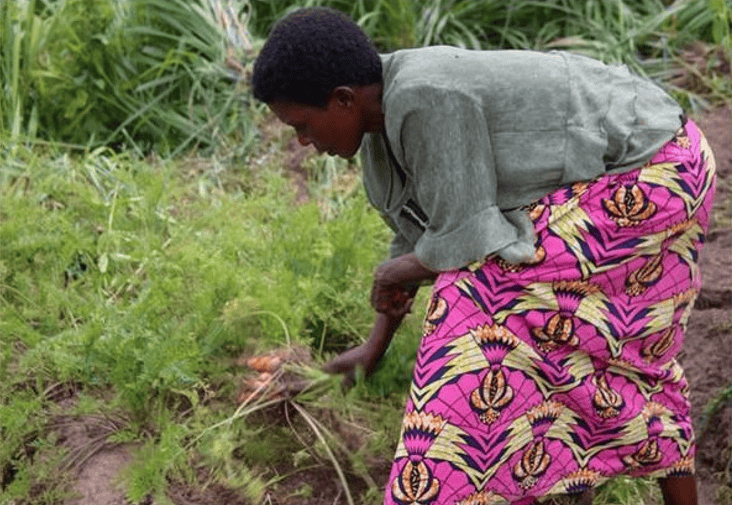
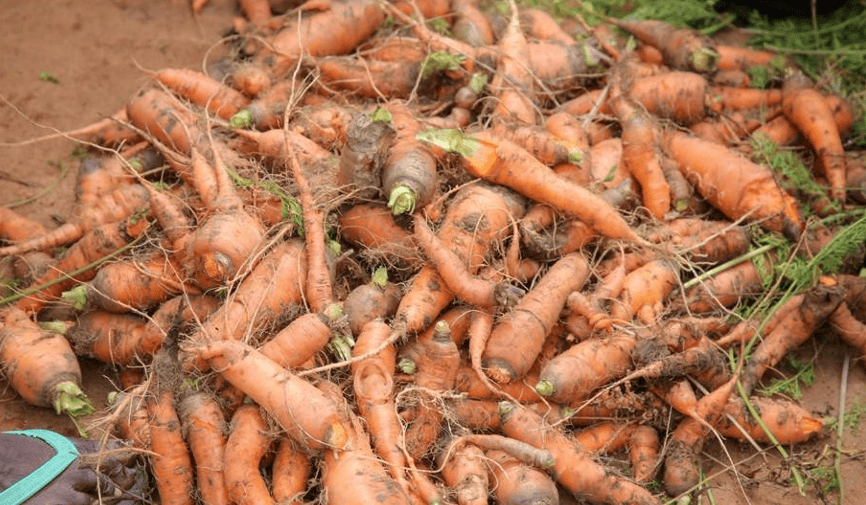
Households harvested carrots from their fields. Although the quantities were not large, this vitamin A-rich crop introduced by the BUREKA project helped improve food access, generate some income, and strengthen community connections. As a new crop in the area, carrots also became a common topic of conversation among community members.
Families began creating simple recipes using cabbage and carrots grown in their own gardens, helping ensure that everyone—especially children—had access to fresh and nutritious meals. In addition to improving their diets, some households sold extra produce to earn income and support other family needs.
Elysee Yohan, like many others, was affected by the inter-ethnic conflict that broke out in Kamonia Territory in 2017. A native of Kamabwe village, she fled the violence with her husband and their 10 children, leaving behind everything they owned. The family sought refuge in the Luangatshima forest.
Recalling that time brings Elysee to tears. They escaped with nothing but the clothes they were wearing.
“Life was very hard for us in the forest,” she said. “My children and I were constantly hungry and had little water to drink. The cold nights were especially frightening for the children, and life became unbearable.”
Elysee tried to find help from nearby communities, but many people were too afraid to assist. Food was scarce, and her children often became sick and weak.
After the conflict, Elysee and her family returned to Kamabwe, only to find that they had nothing left. Despite the challenges, she and her husband, who is now the chief of Kamabwe, worked to rebuild their lives.
She began subsistence farming on a small piece of land to feed her family. However, she faced many challenges, including a lack of quality seeds, tools, and knowledge about farming practices.
Everything began to change when Elysee was identified and registered in the BUREKA Project in the Mukuandjanga Health Area. Through the project, implemented by ADRA, she received support packages, including 20 grams of Kuroda carrot seeds, farming tools, and training in vegetable production.
Elysee planted the seeds and applied what she learned, including planting in rows, timely weeding, and proper harvesting.
After 12 weeks of hard work, she harvested 125 kg (276 lbs) of carrots. As a mother of 10, she was both surprised and overjoyed. Carrots had never been grown in her community before, and she felt proud of what she had achieved.
“No words can express my joy for this bountiful harvest,” she said. “My husband and I are now able to provide healthy food for our children.”
The impact went beyond her household. Elysee shared that carrots have brought joy not only to her family but also to the wider community. Her family enjoys eating carrots with cabbage and fufu, and neighbors have become curious about the new crop. Some have asked for samples to try at home, while others want to learn how to grow carrots themselves.
Elysee also shared that since her harvest, she has made new connections with people interested in learning how to cultivate carrots in Kamonia Territory.
Like many other beneficiaries, Elysee has become an advocate for including carrots in daily meals after seeing the positive impact on her family’s nutrition. She shared that carrots have not only helped reduce malnutrition in the community but have also provided additional income to support expenses like school fees and medical care.