Situated in the rolling hills of south central Madagascar is Ramampiray, a village in the commune of Mahasoabe. The rural landscape is dotted with clusters of houses among the fields of rice, vegetables and fruit trees. But despite its idyllic appearance, the village of Ramampiray struggled with poor sanitation.
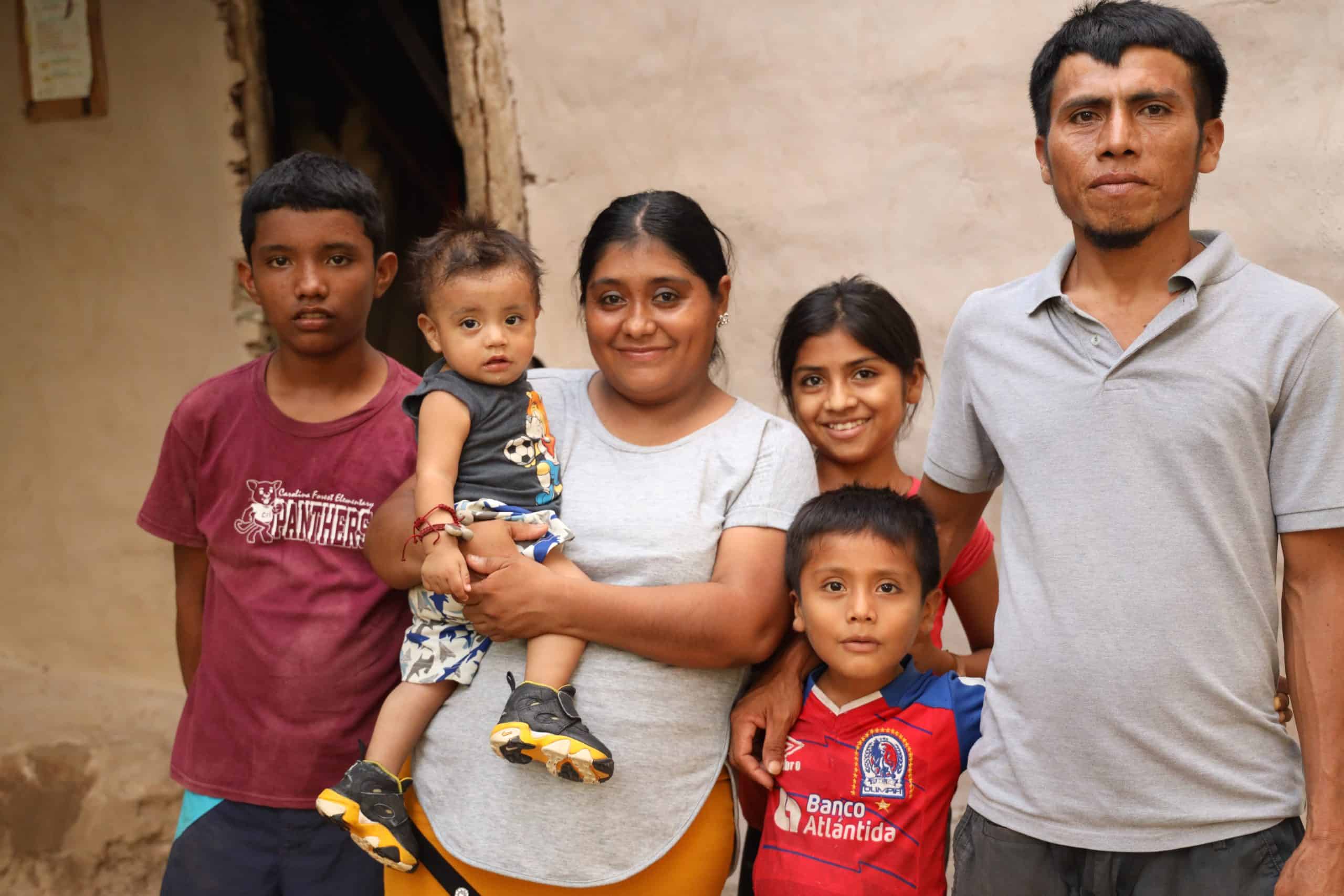
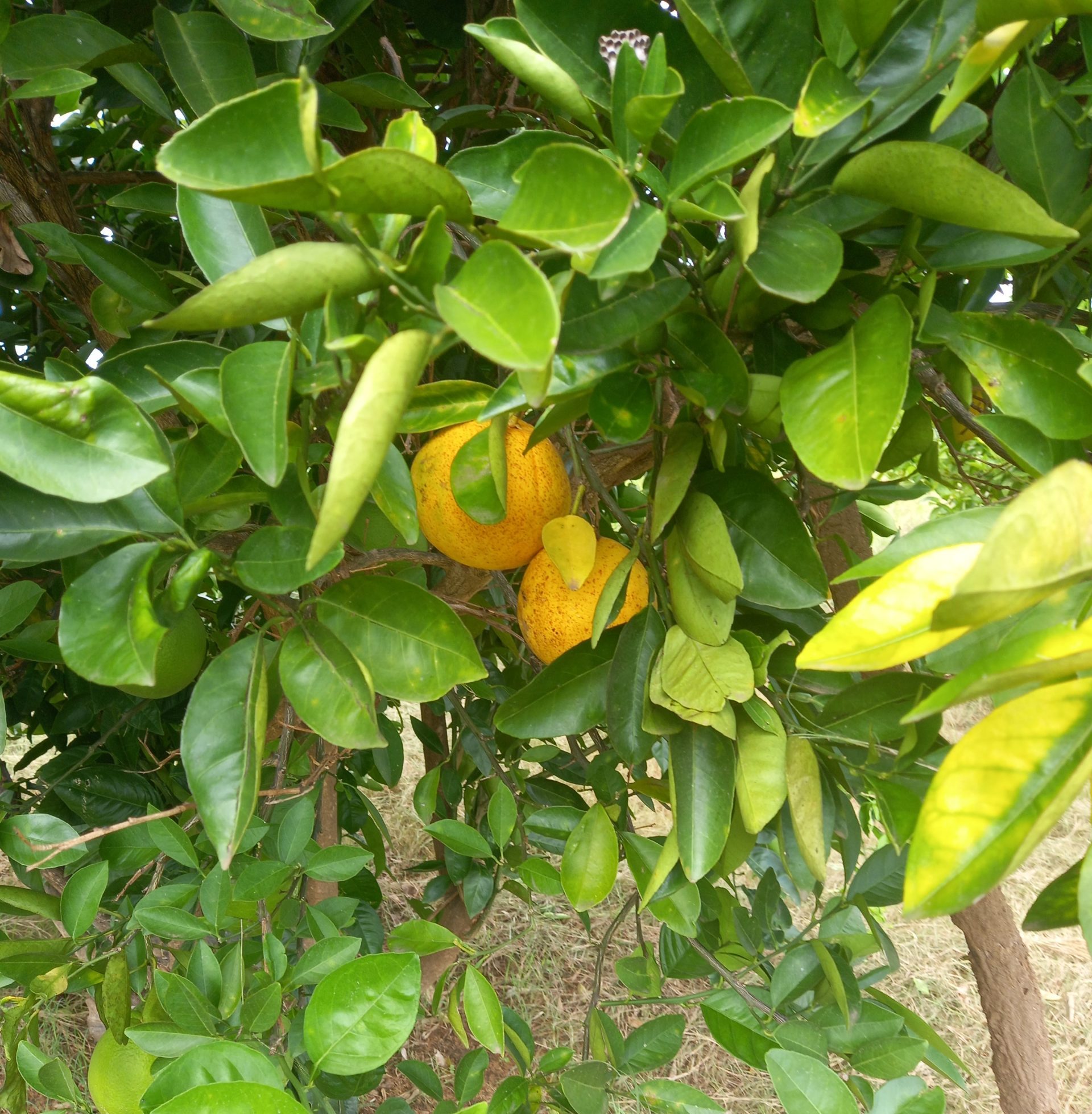
Rafanomazantsoa, known as Rafano, is a 43-year-old farmer in Ramampiray. He and his wife have two children, ages three and one. Rafano’s main livelihood was his orange orchard. However, he had a big problem. “This place was very dirty,” said Rafano. “We didn’t have a latrine, so we defecated in the open air, by the orange trees,” he said.
Aside from the unpleasant smell and health threat, open air defecation was bad for business. “As a result, I couldn’t sell any oranges. The collectors came to see the oranges, but as soon as they saw feces in the dirt, they refused to buy them.”
Without buyers for his oranges, Rafano struggled to find enough food to feed his family. “Before, there were times when we didn’t have anything to eat. Sometimes, I went out to look for money, but went back home with nothing, and the kids didn’t eat,” he said.
But then ADRA began implementing the USAID-funded ASOTRY project in Rafano’s community. In addition to increasing livelihoods and building resilience, ASOTRY also promotes health, nutrition, and hygiene.
Françoise Razanamandroso is a community health worker in Rafano’s community. She has been an AC since 2014. Her work, supported by the ASOTRY project, is to take care of mother and child health, weigh children, do home visits, and teach mother about child nutrition. She also teaches hygiene, hand washing with soap and ash (a low-cost alternative to soap), and she instructs the community about the importance of building latrines.
Working with the ASOTRY project provided Françoise with the perfect opportunity to reach out to Rafano about something that had been bothering her. “I encouraged Rafano to build [a latrine], because when we go to church, we have to walk through this path, close to his orange trees,” she said. “But it used to smell so bad, we could hardly breathe when we walked through here.”
Feeling fed up with the poor quality of air and the health risks, Françoise decided to sensitize the neighborhood about the dangers of open air defecation and the benefits of latrines. “I told them that the flies which fly on the food we eat make us eat feces,” she explained.
Françoise taught Rafano about the importance of good hygiene. She told Rafano that people weren’t buying his oranges because of the feces nearby. In addition to building a latrine, she also encouraged Rafano to engage in other good hygiene practices. “I also taught him to use a tippy tap, and the right time to wash hands,” she said.
In April 2016, less than two weeks after Françoise encouraged him to build a latrine, Rafano’s latrine was complete. Not long after, he started to notice changes in his life. For one thing, he could sell his fruit. “I could sell 300 kg, and earned 45,000 MGA (about $14.70 USD). I even noticed that the oranges weighed more, because the roots were clean,” he said. With the money he earned from his harvest, Rafano could buy kitchen utensils and 20 chickens.
Rafano’s family doesn’t have a problem getting enough food as they did before. “My wife and my children have enough food to eat,” he said. Françoise added that once the area was clean and Rafano saw the improvement in his orange culture, he decided to plant more crops. Now, he also plants sweet potatoes and taro.
It wasn’t enough for Rafano to enjoy the benefits of his latrine alone. Seeing the difference the latrine made to the environment and his oranges, he persuaded his neighbors to also build latrines and follow good hygiene practices. “I instructed my neighbors to be clean too, and for each household build a latrine, because it is so much better to live in a clean environment,” said Rafano. “If we defecate in the open air, for example where we plant green leaves, we end up eating feces.” As a result, Rafano and Françoise reported that many of the neighbors have already started to build their own latrines.
“Before, I didn’t have a latrine,” said Rapoly, one of Rafano’s neighbors. “I saw my neighbor build one, so I decided to build one too. My neighbor, Rafano and Françoise, the community health worker, told us that it is good for each family to have their own latrine.”
Now, Rapoly’s latrine stands several meters from Rafano’s. “I really depend on this latrine,” he said. “Now, this place is so clean and I really enjoy it. Even the crops are thriving.”
Françoise has noticed many changes in the community since the ASOTRY project began. “We have the Lead Mothers who help me doing the awareness sessions, so the community uses tippy taps and soap and ash,” she said. She has noticed that the number of children having diarrhea has considerably decreased. Before, the number of children with diarrhea was very high, especially during harvest time, she noted. “I really thank ADRA for working in Mahasoabe village,” Françoise said. “We now live in clean air.”