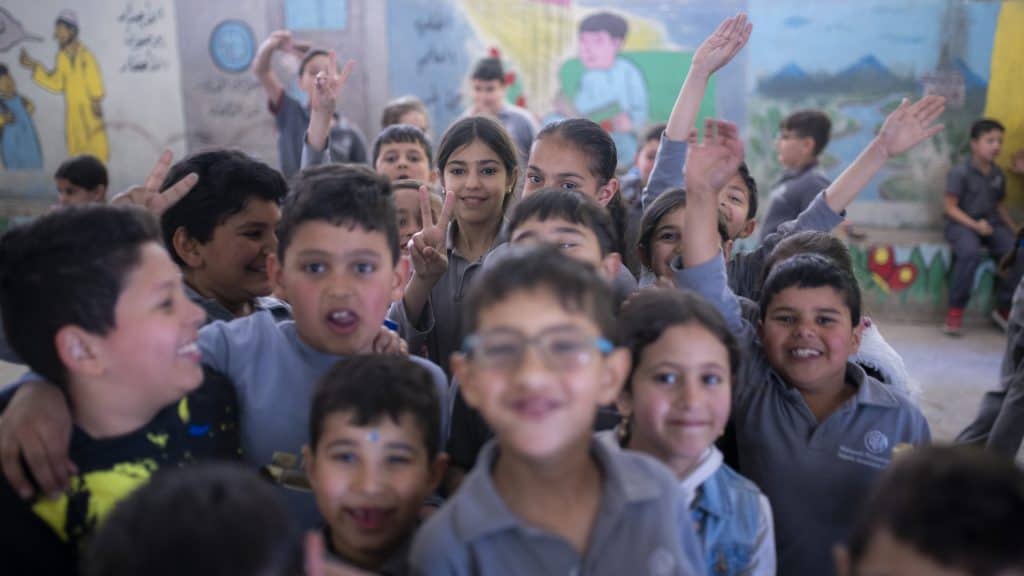
For millions of children living amid conflict, displacement, and poverty, education is more than a classroom experience. It is protection. It is stability. It is the foundation for a future that once seemed impossible.
As we observe International Day of Education this year, ADRA International is reaffirming its commitment to ensuring that education remains accessible, inclusive, and transformative, especially for girls in crisis-affected countries.
The Global Education Crisis
The need has never been more urgent.
- More than 264 million children worldwide are not attending school
- 63% of people over the age of 15, who are living in extreme poverty, have no access to education
- 773 million people cannot read, the majority of whom are women and girls
Without education, cycles of poverty, inequality, and vulnerability deepen. For girls, the consequences are especially severe. Limited access to education increases the risk of early marriage, exploitation, poor health outcomes, and lifelong economic insecurity.
This is why educating girls globally is not only a moral imperative, but a proven pathway to stronger families, healthier communities, and more resilient societies.
ADRA’s Commitment to Education That Transforms Lives
ADRA’s education programs focus on far more than literacy alone. Education is about unlocking opportunity, strengthening self-reliance, and empowering individuals to shape their own futures.
In 2024, ADRA education programs reached more than 1.7 million people, providing access to learning in some of the world’s most challenging environments. From classrooms in refugee settlements to vocational training and literacy initiatives, ADRA works to ensure that no child is left behind because of conflict, displacement, or poverty.
Nowhere is this commitment more visible than in communities affected by prolonged conflict, such as the Democratic Republic of Congo (DRC).
Conflict, Displacement, and Education in the DRC and Uganda
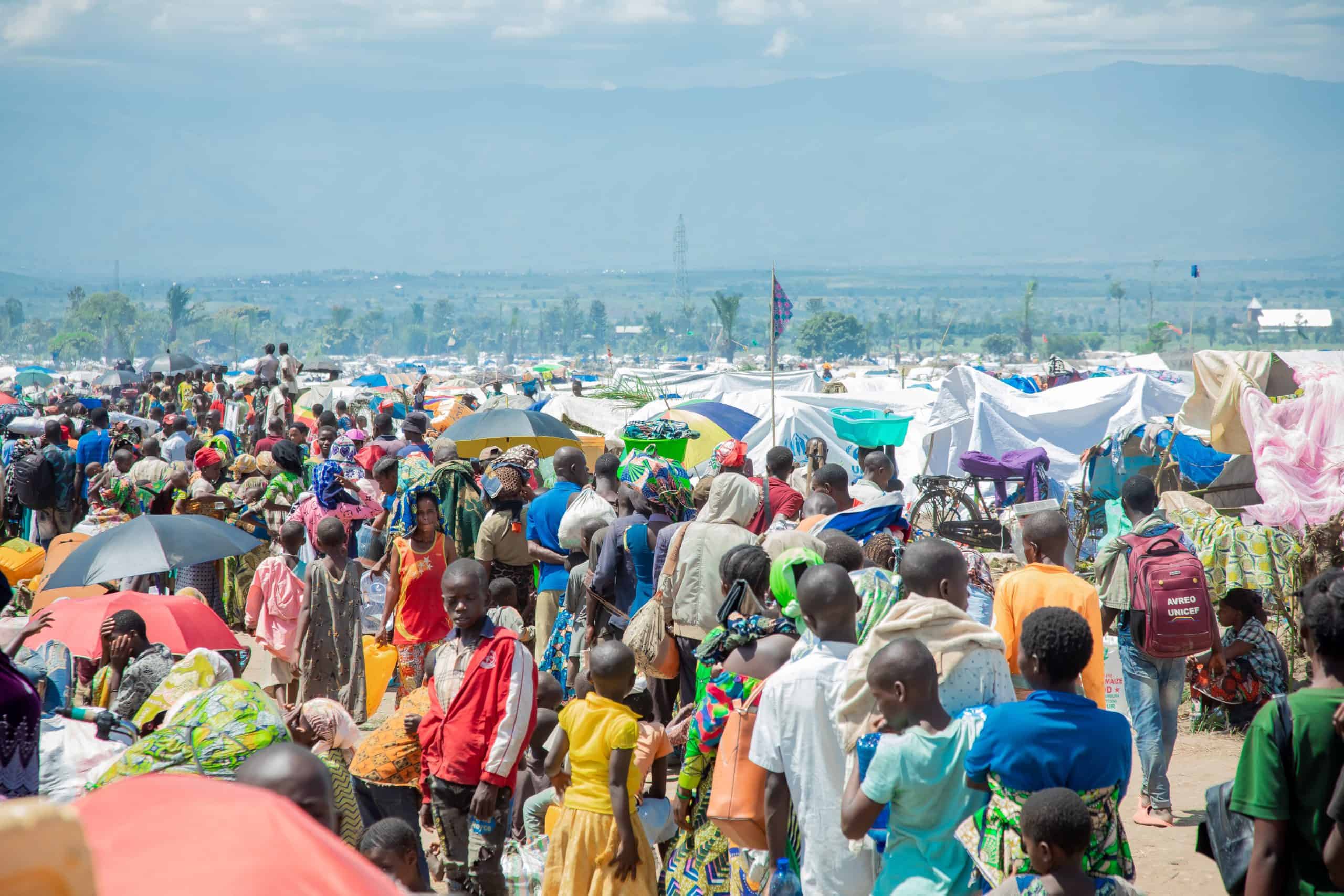
Decades of violence in eastern DRC have forced millions to flee their homes. Ongoing armed conflict has devastated families, destroyed infrastructure, and stripped children of the opportunity to attend school safely.
Many refugees from the DRC have sought safety in neighboring Uganda, where refugee settlements offer protection but limited resources. In these fragile settings, education becomes both a challenge and a lifeline.
For girls who have survived violence, loss, and displacement, access to education offers structure, safety, and hope for something beyond survival.
Venancia’s Story: When Education Is All That Remains
Venancia knows this reality all too well.
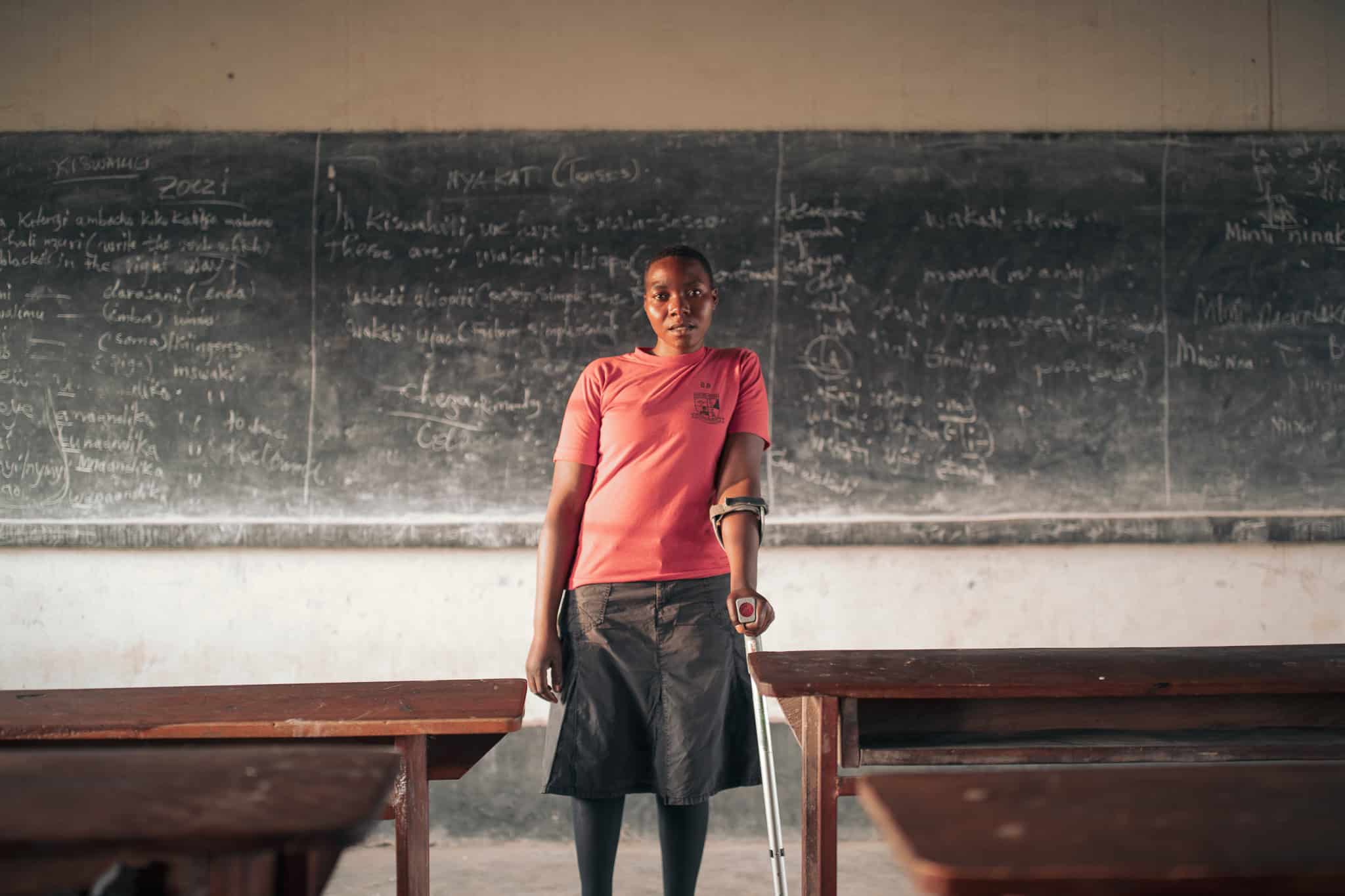
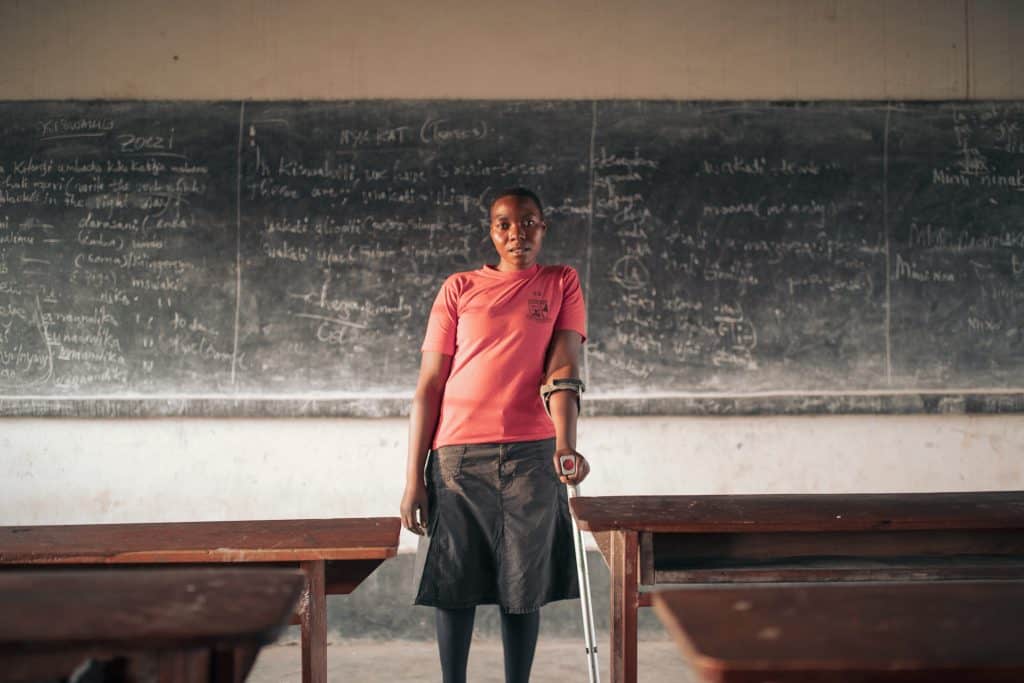
Now 18 years old, Venancia fled the DRC more than six years ago. She was born into a large family, but by the time she and her mother escaped to Uganda, every one of her siblings had been killed in the conflict.
“I don’t know when the war started,” Venancia says. “There has been war ever since I was born.”
As a child, she was playing with friends when a stray bullet struck her leg. Left injured for nearly a day, she was eventually taken to a hospital, where doctors amputated her leg below the knee. After a long recovery, she learned to walk using crutches.
Despite her injury, Venancia says the loss of her family was far worse.
“All of my siblings were shot by the rebels, all of them at different times. My mom finally decided that if we wanted to live, we would have to leave.”
They walked for a week until they reached the Ugandan border and were transported to a refugee settlement. There, they received food rations, a small plot of land, and a tarp for shelter. Life was still incredibly difficult, but for the first time, they were safe.
And Venancia was able to return to school.
School became her refuge. Though she had missed months of education and faced a language barrier, she remained determined.
“I speak French back in my country,” she says. “But I didn’t mind that I couldn’t understand anything at first. I knew I would learn. I would rather learn English than go back to Congo and risk my life.”
For Venancia, education for girls is not abstract. It is survival.
“Education is important because I can empower myself,” she says. “I want to be a doctor. I want to help refugees and disabled people like me.”
After her mother passed away, Venancia moved into her school dormitory. Her school is now her home. Her classmates are her family. Education is all she has left and the key to the future she still believes is possible.
“If it weren’t for school,” she says, “I would be all alone.”
Why Supporting Girls’ Education Matters
Venancia’s story is not unique. Around the world, millions of children living in fragile and conflict-affected settings face similar barriers. When education is disrupted, so are their chances of independence, safety, and hope.
On International Day of Education, ADRA International calls on the global community to stand with girls like Venancia, whose courage and determination remind us why education matters.
Because when girls are educated, families thrive, communities grow stronger, and futures are rebuilt, even after unimaginable loss.
Education does more than teach. Education changes lives.