In the remote village of Dacope, Bangladesh, where the land is affected by high salinity and farming is a challenge, families struggle to find reliable sources of income. For women in particular, opportunities to earn a living and support their families are limited. But thanks to ADRA Bangladesh’s Community Empowerment Project (CEP), women like Gandari Sarder are finding hope through sustainable livelihoods—starting with goats.
A New Path to Opportunity
Gandari Sarder, a hardworking mother, faced constant financial difficulties. With her husband working as a day laborer, his income was barely enough to cover their daily expenses, let alone their children’s education. The weight of financial stress was overwhelming.
“Every day, I had to manage complicated financial circumstances while trying to make sure my family had three well-balanced meals,” Gandari shared. “I got up early to find work to support my family, but debt made this difficult.”
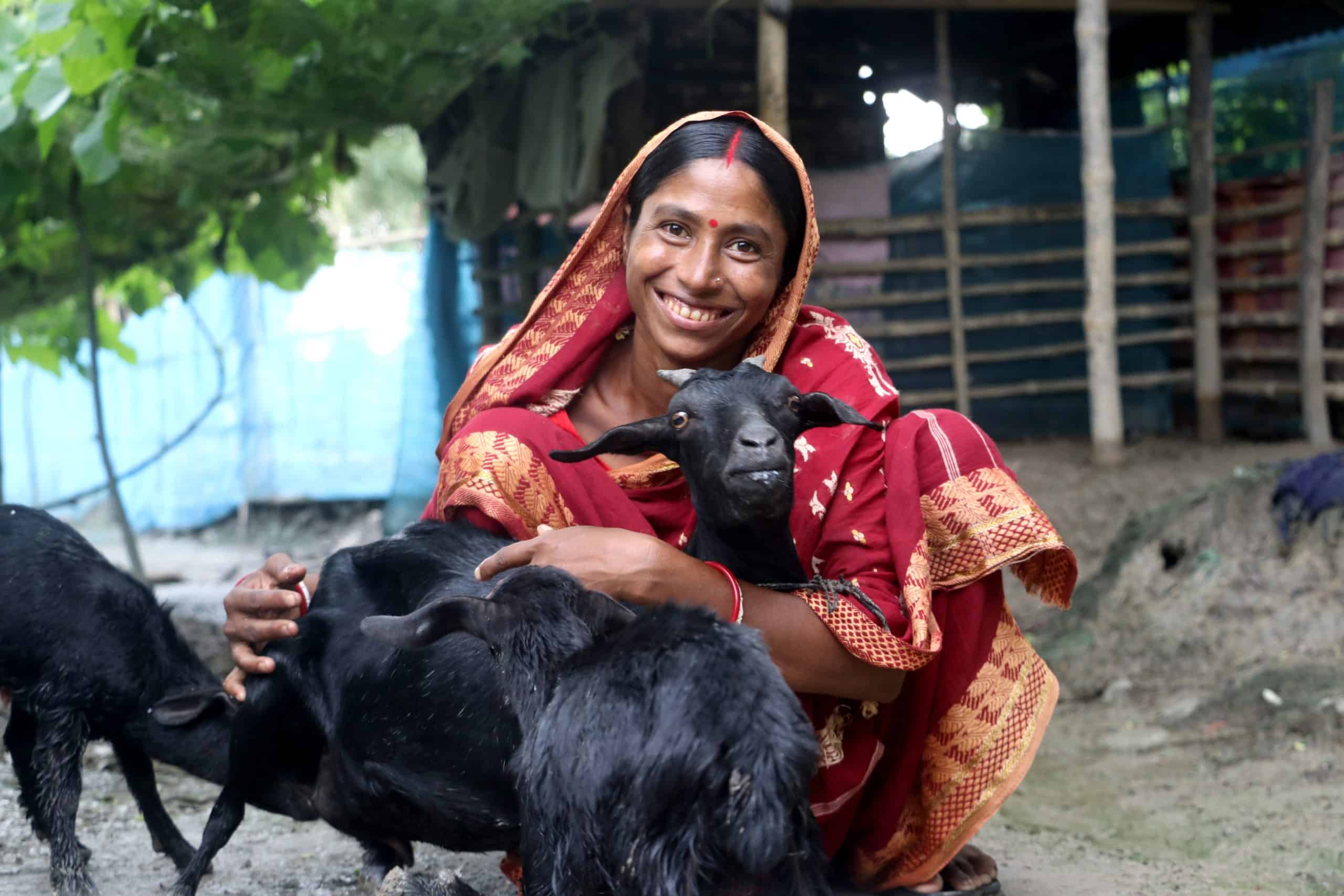
When Gandari learned about ADRA’s Community Empowerment Project, she saw a new opportunity. CEP provided her with two goats, training in animal husbandry, and ongoing support to help her start a small goat-rearing business. In regions like Dacope, where traditional farming is difficult, goat farming is a practical and sustainable source of income. Goats reproduce quickly, require minimal investment, and can provide a steady source of financial stability for struggling families.
Overcoming Challenges, Building Success
At first, Gandari faced difficulties. Access to veterinary care, nutritious feed, and proper training were obstacles in her journey. Summers brought food scarcity for the goats, and diseases like Peste des Petits Ruminants (PPR) posed risks to her small herd. However, ADRA’s training and guidance helped her navigate these challenges.
With dedication and the support of ADRA staff, Gandari’s efforts paid off. Her goats multiplied, and soon she had nine healthy goats. She sold five of the youngest ones for 16,000 taka—a significant financial gain for her family. The income allowed her to purchase more food for both her goats and her children, invest in their education, and expand her business.
“Now, I can afford the educational expenses of my children. I can arrange three meals for them. Everything has been possible due to the support of CEP of ADRA Bangladesh,” Gandari said with gratitude.
A Ripple Effect of Change
Gandari’s success did not go unnoticed. Other women in her community saw her progress and were inspired to start their own goat-rearing businesses. She took it upon herself to share her knowledge, teaching women the basics of goat farming, the importance of proper care, and how they too could achieve financial independence.
“I shared stories of my successes, from selling goats to participating in local farmers’ markets. I also offered practical advice and guidelines to help others get started in the business,” she explained.
With continued support from ADRA, Gandari expanded her business further. She reinvested her earnings to build a better shelter for her goats and planted a garden to provide additional feed. The training she received in breeding techniques and disease prevention helped her maintain a healthy herd and increase profitability.
Hope for the Future
Today, Gandari is more than just a successful goat farmer—she is a role model in her village. Her journey from financial insecurity to stability has shown the power of opportunity, determination, and support. Through ADRA’s Community Empowerment Project, women like her are not just improving their own lives but are transforming entire communities.
ADRA’s commitment to sustainable livelihoods continues to create pathways out of poverty for vulnerable families around the world. By investing in practical solutions like goat farming, ADRA is empowering individuals, strengthening communities, and ensuring a brighter future for generations to come.
To contribute to ADRA’s work in livelihoods and how you can support projects like this, visit ADRA’s website.