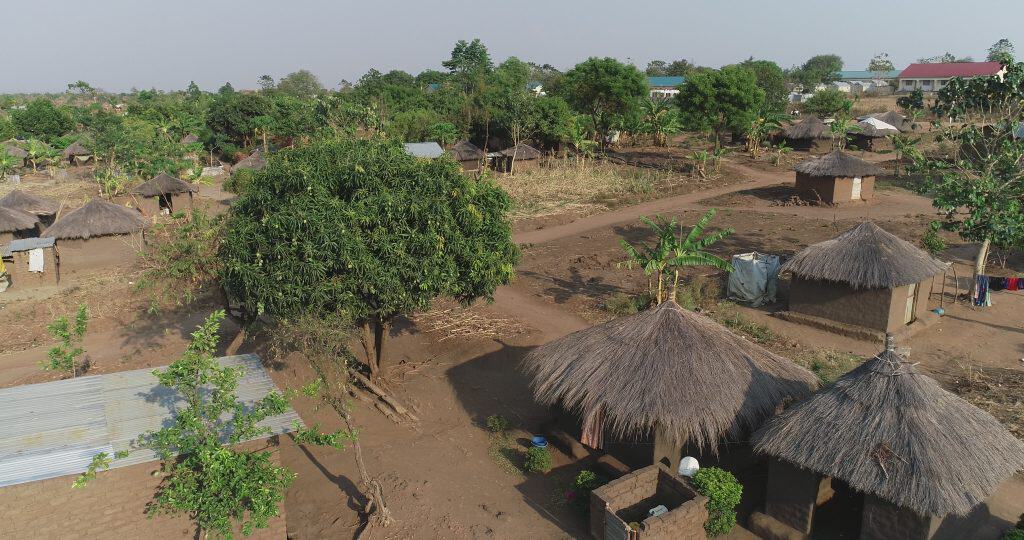
Fatooma Alnour Ibrahim, 35, is a farmer and head of a household of 11. She lives in Said Mahadi village in Aljabalain locality, White Nile State. Like many families in Sudan, her life has been shaped by displacement, conflict, and climate-related challenges.
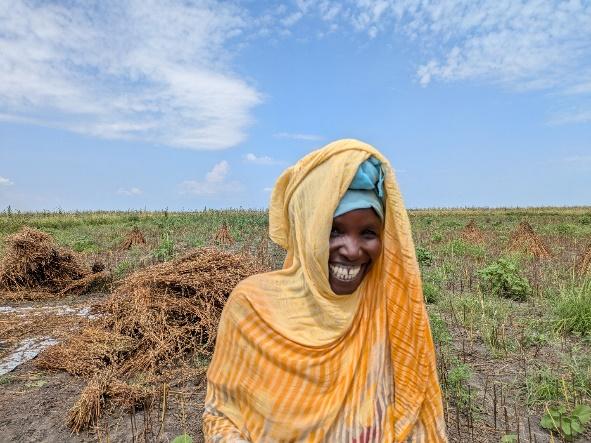
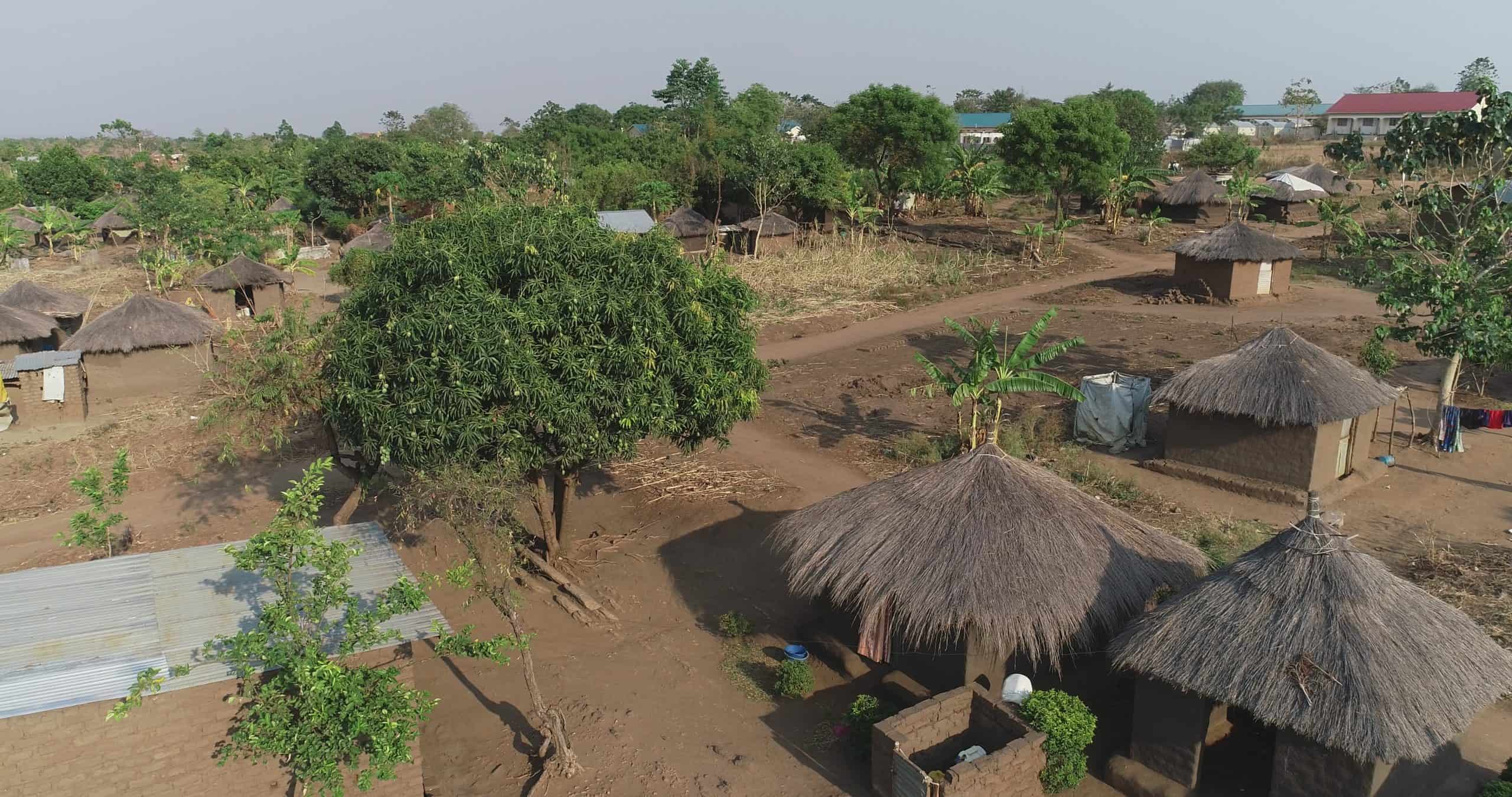
Fatooma and her family were forced to leave their home in Blue Nile State because of ongoing conflict. They fled to Said Mahadi village, a place that also faces challenges like flooding and limited access to basic resources. Starting over was not easy. With no steady income and few farming supplies, her family struggled to survive. “We barely had enough to eat, let alone enough to grow a proper crop,” Fatooma recalled.
In 2023, things began to change. ADRA Sudan, working with USAID and CIMMYT through the SASAS project, introduced new agricultural support in Said Mahadi. The program aimed to help smallholder farmers, especially displaced families, rebuild their lives. It provided high-quality seeds, training in climate-smart farming, and encouraged farmers to work together through local cooperatives.
Hoping for a better future, Fatooma joined the Almujtdeen Cooperative. At first, she was unsure if it would really help. “I didn’t think it would make much difference,” she said. “But I decided to give it a chance.”
Through the cooperative, she received subsidized sesame and sorghum seeds from a trained Last Mile Agent. With help from five family members, she planted seven feddans of sesame. The harvest exceeded all expectations—her family produced 2,100 kilograms of sesame, far more than ever before.
“The profits have been very good, especially with sesame prices being high,” she said. “I earned more than 6,142,500 SDG from selling sesame. I plan to save some seeds for the next season. This experience has shown me what is possible with the right support, and I believe my income will continue to grow.”
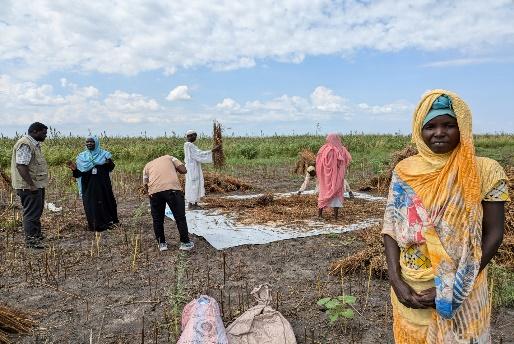
Fatooma’s success became a turning point for her family. With the income from her harvest, she was able to invest back into her farming and better provide for her children, bringing new stability and hope to their lives.
Her story reflects the strength and resilience of displaced families facing difficult challenges. Through ADRA’s support—providing quality seeds, practical training, and better access to markets—farmers like Fatooma now have the tools not just to survive, but to build a better future.
“Now, I have hope for the future,” Fatooma said. “I am grateful to ADRA, USAID, and CIMMYT for their support. This experience has given me the confidence to grow my farming and care for my family.”