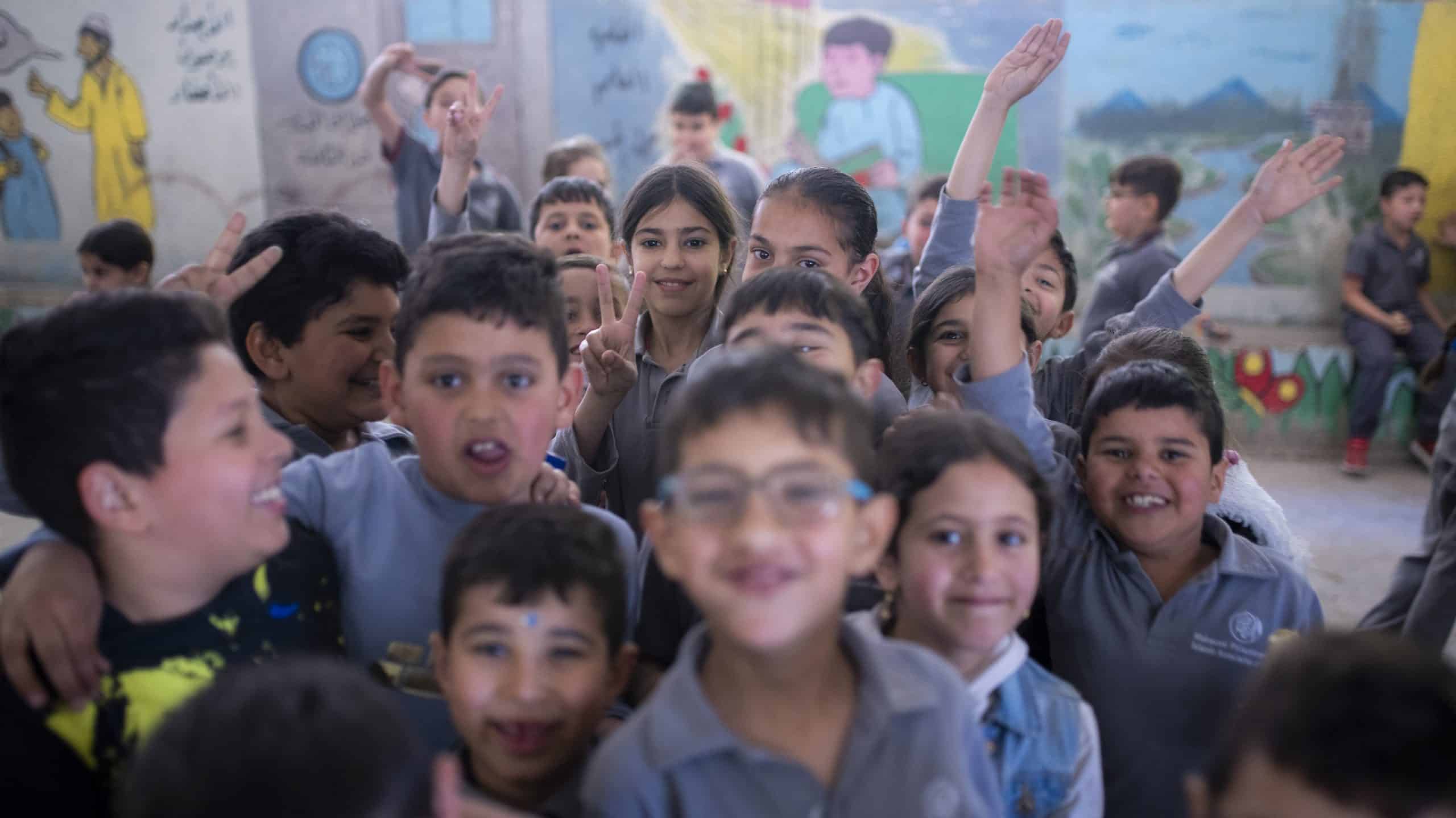
Hay un momento en los Evangelios al que vuelvo a menudo. Los discípulos, tratando de controlar a la multitud, apartan a los niños de Jesús. Y Jesús les detiene. No permite simplemente que los niños se acerquen. Reprende a los que quieren mantenerlos a distancia. “Dejad que vengan”, les dice. “No se lo impidáis”.”
Mientras nos preparamos para celebrar el Día Mundial del Refugiado a finales de este mes, el 20 de junio, un día que este año se celebra bajo el lema “Hasta que todos estén a salvo”, no puedo leer esas palabras de Jesús sin pensar en los casi 49 millones de niños de todo el mundo que se han visto obligados a abandonar sus hogares.
Niños que no eligieron la guerra. Que no trazaron fronteras. Niños en movimiento.
Los niños soportan lo que no han elegido
El desplazamiento afecta a todo el mundo, pero a los niños les afecta de forma diferente. Un adulto obligado a huir lleva consigo dolor, pérdida y retos inimaginables. Un niño en la misma situación comparte esos retos y muchos más.
Un niño que se desplaza suele dejar atrás todo lo que conoce. Los amigos que quiere, la comunidad a la que llama hogar, la educación en la que confía para el futuro, la seguridad de la que nunca antes tuvo que preocuparse.
Por eso los niños están en el centro del trabajo de ADRA con las comunidades desplazadas. Niños del Líbano que llevan años sin sentarse en un aula. Pequeños en Sudán que han caminado distancias que agotarían a un adulto, a veces sin un padre a su lado. Niños a lo largo de las rutas migratorias en América Latina que cargan con recuerdos que ninguna infancia debería guardar. Niños de Ucrania que se estremecen ante sonidos que el resto de nosotros apenas percibimos.
Cuando he tenido la oportunidad de pasar tiempo con niños refugiados, lo que más me impresiona no son las dificultades. Es la resistencia que hay debajo de ellas.
Todavía se ríen cuando algo les hace gracia. Siguen buscando la mano de alguien en la oscuridad. Siguen queriendo aprender, jugar, pertenecer a algún sitio.
A pesar de lo que la crisis pueda arrebatarles, los niños siguen siendo niños.
No es una cuestión política. Es una cuestión humana.
La política de refugiados se ha politizado profundamente en muchas partes del mundo. Personas razonables tienen opiniones diferentes sobre las fronteras, la capacidad y las responsabilidades de las naciones. Reconozco y comprendo lo complicado que es.
Pero un niño no es una posición política. Una niña de siete años que ha perdido su casa no es el símbolo de un debate. Es una niña que Dios ve, conoce y ama, del mismo modo que ve y ama a todos los niños que leen esto a su lado.
Sea cual sea nuestra política, creo que la mayoría de nosotros compartimos una convicción básica: los niños merecen protección. Merecen seguridad. Merecen la oportunidad de crecer con su dignidad intacta. Esa convicción no es partidista. Es humana. Y para quienes seguimos a Jesús, también es teológica.
No les ponga trabas
Las palabras de Jesús a sus discípulos no eran sólo una invitación. Eran una corrección. Los discípulos pensaban que estaban siendo prácticos: controlando a la multitud, manteniendo el orden. Lo que en realidad estaban haciendo era poner una barrera entre las personas vulnerables y Aquel que podía ayudarles.
Me siento con ese reto. Es fácil, en un mundo lleno de necesidades urgentes, dejar que la distancia y la complejidad se conviertan también en una especie de barrera. Sentirnos abrumados y, en ese agobio, mirar hacia otro lado. Dejar pasar el titular sin que nos cueste nada.
En ADRA, intentamos estar cerca. Nuestros equipos están presentes en los lugares que la mayoría de la gente ha dejado de ver. Están distribuyendo alimentos, restableciendo el acceso a la educación, prestando apoyo psicosocial a niños y familias que superan traumas. No porque sea fácil, sino porque la proximidad es una forma de fidelidad.
Cada niño, siempre visto
Una de las verdades más reconfortantes de las Escrituras es que Dios ve a quienes el mundo pasa por alto. Agar, abandonada en el desierto, le llama “el Dios que me ve”. Los Salmos vuelven una y otra vez a la imagen de Dios que se acerca a los quebrantados de corazón.
Creo que sigue siendo cierto. Por cada niño que cruza una frontera con miedo, por cada niño que busca seguridad en una crisis, por cada niño sentado en un refugio temporal preguntándose qué vendrá después. Dios no los ha perdido de vista. La cuestión es si nosotros lo hemos hecho.
Este año, en el Día Mundial del Refugiado, te pido simplemente que mires. Que dejéis que la historia de un niño os llegue a través de cualquier distancia que os separe de ella. Que resistáis al adormecimiento que producen demasiados titulares y recordéis que detrás de cada número hay un nombre, un rostro, una vida que importa a Dios.
Jesús no dijo simplemente “dejadles venir”. Dijo “no se lo impidáis”. Hay una postura en ello, un despejar activamente el camino. A eso nos llama este momento. No al heroísmo. Sólo fidelidad.
Y luego, si puedes, haz algo. Da, reza, aboga. Hasta que todos estén a salvo, sé tú quien se niegue a que los niños sean rechazados.