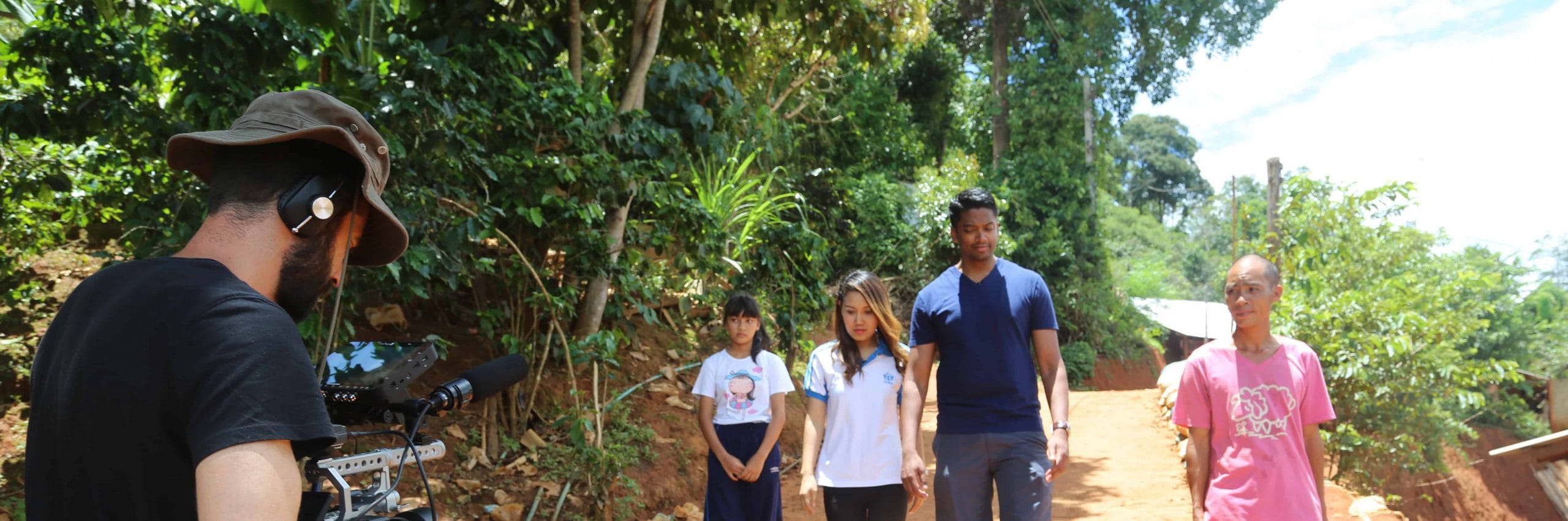
Pim freut sich nicht, ihren Vater zu sehen. Die 14-Jährige vermeidet nervös Augenkontakt, und ihre kleinen Hände flattern umher wie Vögel mit gebrochenen Flügeln. Sie verlagert ihr Gewicht von einem Bein auf das andere, beißt sich auf die Lippe und pustet eine Haarsträhne weg, die ihr über die Stirn fällt. Die Strähne fällt trotzdem herunter und verdeckt eines ihrer geheimnisvoll verborgenen Augen.

Für ein Mädchen, das zu ihrem Zuhause und ihrer Familie zurückkehrt, verhält sie sich weniger wie ein Kind, das wieder mit seinen Angehörigen vereint ist, als vielmehr wie eine Gefangene, die auf ihr Urteil wartet. In gewisser Weise ist sie genau das.
“Er sagt, er kann es im Moment nicht mit ihr aufnehmen”, übersetzt Joy.
Das sind gute Nachrichten. Es bedeutet, dass Pim in das Tierheim zurückkehren kann, in dem sie seit sieben Jahren lebt – wo ihre Freunde, ihre Welpen, ihre Hühner und ihr Gitarrenunterricht darauf warten, sie wieder willkommen zu heißen. Es ist eine gute Nachricht, aber sie ist von einer Traurigkeit umgeben, die kein Kind verdient. Denn obwohl sie unbedingt ins Tierheim zurückkehren möchte, gibt es zweifellos einen Teil von ihr, der sich verzweifelt wünscht, dass ihr Vater sie zu Hause willkommen heißt.
Eine bessere Nachricht wäre vielleicht, dass Pim ihre eigene Familie und Gemeinschaft nicht mehr fürchten muss. Die vielleicht beste Nachricht von allen wäre, dass die Welt, in die Pim hineingeboren wurde, nicht mehr zulässt, dass junge Mädchen zu sexuellen Waren reduziert werden.
Doch das ist nicht der Fall. Pim lebt nach wie vor auf einem Planeten, auf dem derzeit über 20 Millionen Menschen zum Zwecke der kommerziellen Sexausbeutung oder der Zwangsarbeit gehandelt werden, und daher muss sie sich mit dem begnügen, was sie an Gutem bekommen kann.
Auf der Rückfahrt zum Frauenhaus verwandelt sich Pim langsam wieder in das Mädchen, das ich vor einigen Tagen kennengelernt habe – deren Augen vor Lachen strahlen und deren Lippen einen Hauch von verspielter Schelmerei verraten. Vorerst hat sie die Gefahr, in die Sklaverei verkauft zu werden, hinter sich gelassen.
Als wir uns „Keep Girls Safe“ nähern, einem geräumigen und weitläufigen Haus, das etwas abseits in Chiang Rai liegt, drückt Pim ihr Gesicht gegen die Scheibe und lächelt. Einige der 30 Mädchen, für die dieses Heim ein Zuhause ist, rennen zum Auto und drängen sich an den Türen. Pim steigt aus, und sie stürzen sich in eine Umarmung, wie sie nur eine Gruppe glücklicher Kinder zustande bringen kann. Pim ist wieder da.

Wenn das Zuhause ein Ort der Familie, des Lachens und der Geborgenheit ist, dann ist die Zufluchtsstätte „Keep Girls Safe“ das einzige Zuhause, das Pim je gekannt hat. Hier wird ihr Herz geliebt, ihr Verstand geschult und ihre Unschuld bewahrt. In einer Gesellschaft, in der Mädchen oft danach bewertet werden, wie viel Geld sie durch Zwangsarbeit und sexuelle Handlungen einbringen können, ist Letzteres ein besonders seltenes Geschenk.

„Keep Girls Safe“ setzt das um, wozu ein Großteil der Welt nicht bereit oder in der Lage ist: jedem kleinen Mädchen eine sichere und glückliche Kindheit zu ermöglichen. Die Mädchen, die hier leben, haben genau das. Sie züchten Fische und Hühner, spielen Musikinstrumente, bauen Obst und Gemüse an, lernen traditionelle Tänze und kuscheln mit den drei Welpen, die hier leben. Außerdem lernen sie unter anderem Lesen, Schreiben und Rechnen, damit sie, wenn sie das Heim verlassen, mit ihrem Verstand statt mit ihrem Körper punkten können.
Die Welt mag zwar räuberisch und unsicher sein, aber hier wird sie vom Gackern der Hühner, dem Bellen der Welpen und dem Lachen von 30 glücklichen und beschützten Mädchen in Schach gehalten.