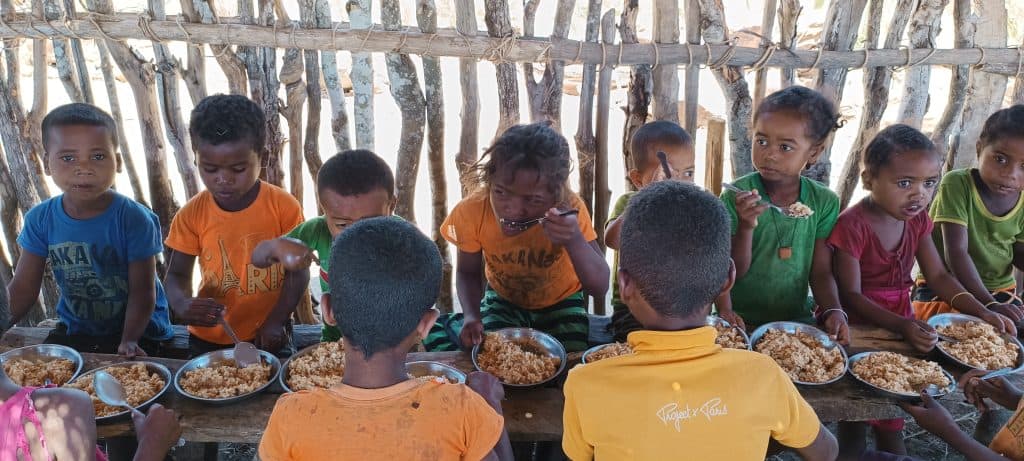
Maro Jeanine steht inmitten eines endlosen Gemüsefeldes in Madagaskar und erinnert sich daran, wie ihr Dorf vor Jahren aussah. “Früher haben wir viel Geld ausgegeben, um unsere Kinder zum Arzt zu bringen, weil sie oft krank waren. Normalerweise haben wir den ganzen Tag nur Maniok gegessen”, erklärt sie.
Im Dorf North Andoharano, Lazarivo Commune, South Betioky District, waren viele Haushalte aufgrund des begrenzten Zugangs zu Nahrungsmitteln, des geringen Bewusstseins für richtige Ernährung und unangemessener landwirtschaftlicher Praktiken von Unterernährung und schlechter Gesundheit betroffen. Die Kinder waren am stärksten betroffen.
Im Rahmen des ASOTRY-Projekts ging Action Intercoopération Madagascar (AIM) eine Partnerschaft mit der Gemeinschaft ein, um die Gesundheit und Ernährung von Frauen und Kindern zu verbessern. Die Landwirte verbesserten die Nahrungsmittelproduktion durch Feldschulen, während Gesundheitsbeauftragte der Gemeinde und leitende Mütter die Familien dabei unterstützten, gesündere Gewohnheiten zu entwickeln.
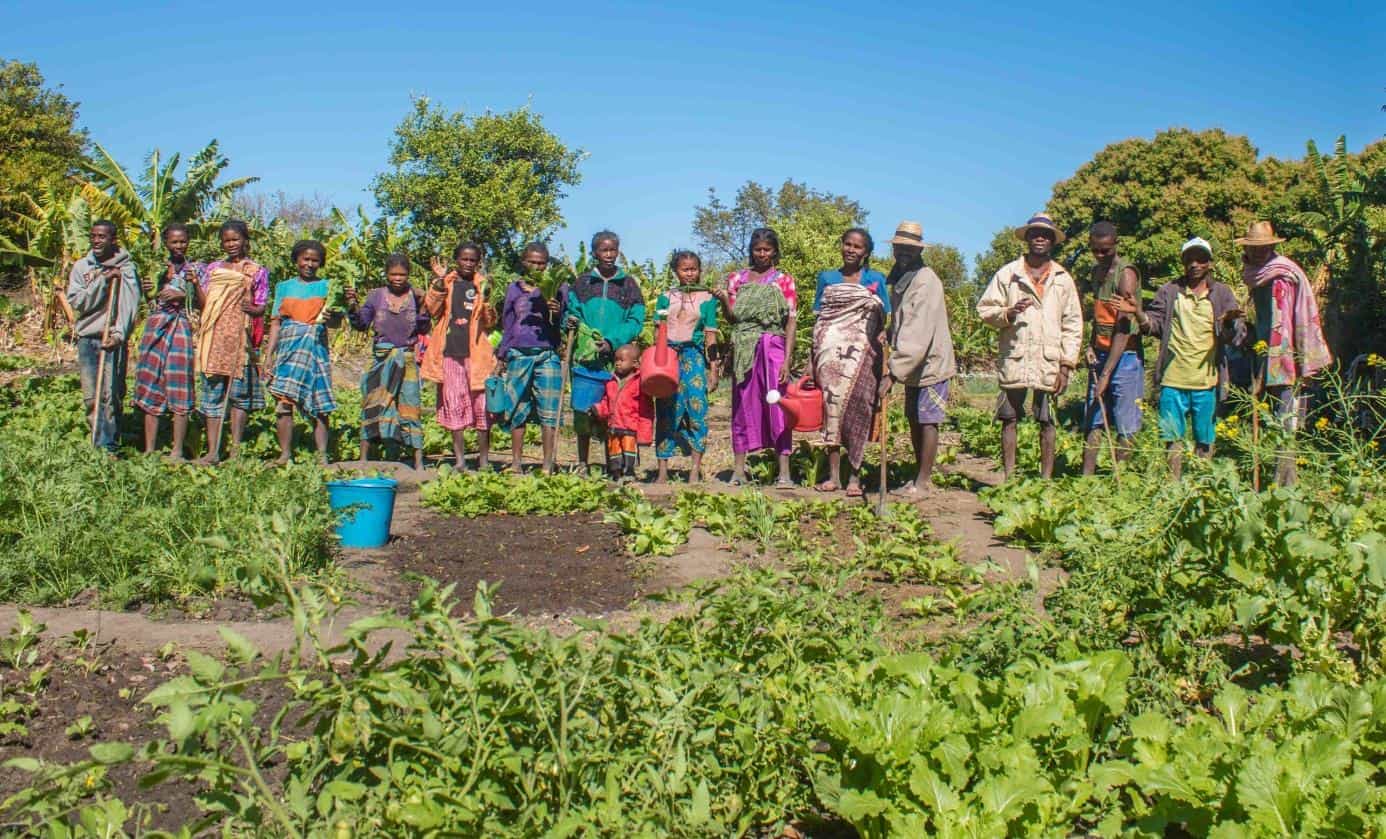
Jeanine, eine freiwillige Gesundheitshelferin (Community Health Volunteer, CHV), und fünfzehn leitende Mütter aus Andoharano gehören zu denjenigen, die im Rahmen des Projekts eine Schulung über den Anbau von Gemüse auf dem eigenen Hof und die richtige Ernährung erhalten haben.
“Vor dem ASOTRY-Projekt war unser Wissen begrenzt”, sagt Jeanine. “Die Qualität und Quantität unserer Produktionen war sehr gering. Jetzt, wo wir verschiedene Schulungen erhalten haben, hat sich alles geändert.”
“Früher haben wir in Goldgruben gearbeitet. Wir sind bis zu 5 km am Tag gelaufen, wir haben unter der brennenden Sonne gearbeitet, unsere Knie waren wund, aber wir konnten kaum ein paar Goldpulver für einen ganzen Tag finden, was nur etwa 2.000 MGA kostet. Manche Frauen kehren mit leeren Taschen nach Hause zurück”, sagt sie.
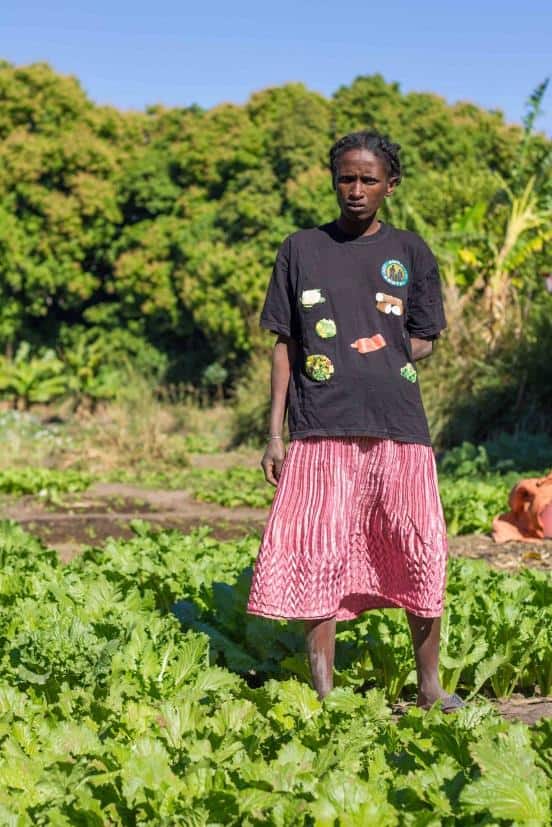
Heute baut die Gemeinschaft auf einem Gemüsegarten von 1 Hektar Gemüse wie Karotten, Zwiebeln, grüne Blätter, Tomaten und Schnittlauch an. Die Frauen arbeiten gemeinsam mit der Unterstützung ihrer Ehemänner an der Pflege dieses großen Gartens. “Während die Frauen pflanzen, helfen die Männer beim Gießen und unterstützen sie beim Verkauf der Produkte auf dem Markt der Gemeinde”, sagt Jeanines Mann.
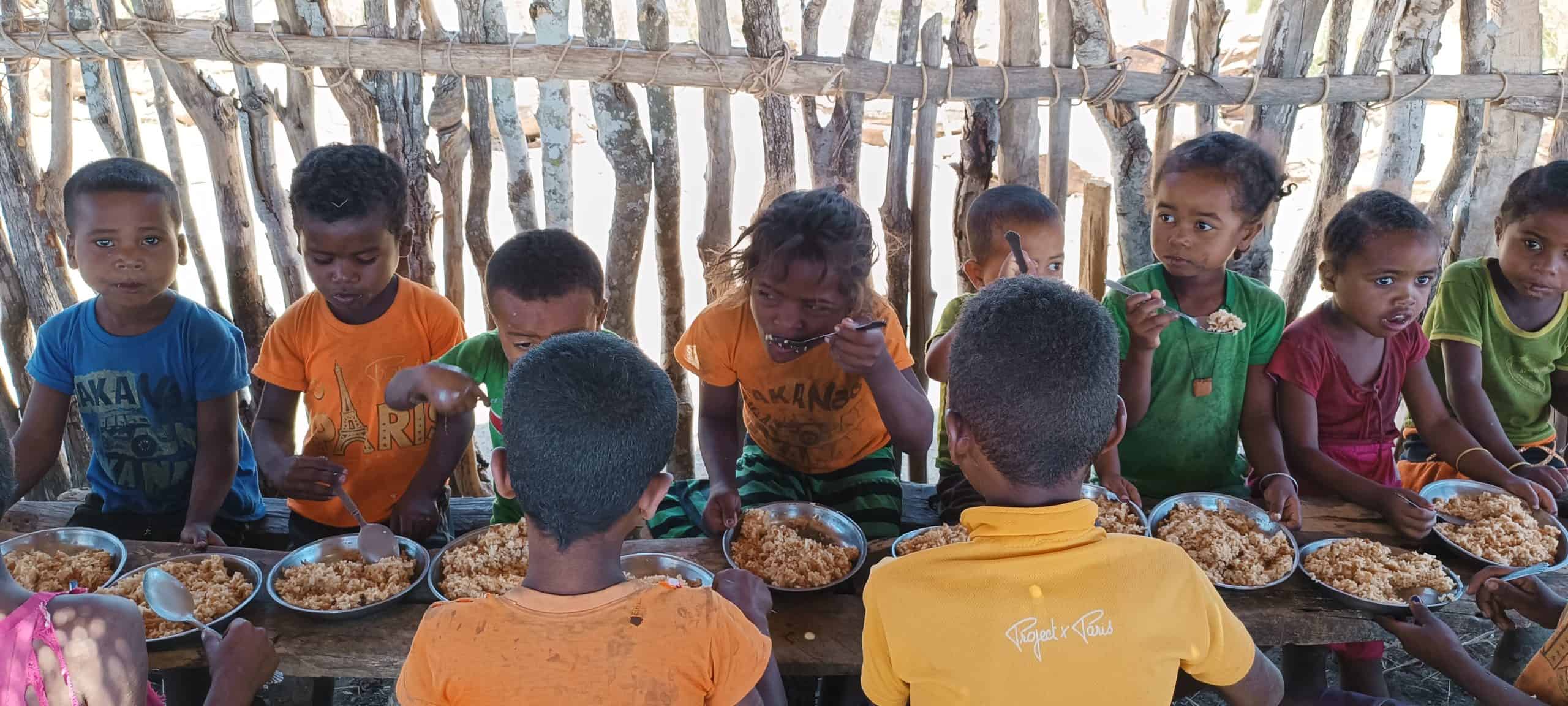
Jetzt verfügen sie über das Wissen und die Produkte, um ihre Familien mit einer gesunden und abwechslungsreichen Ernährung zu versorgen. “Die Familien essen dreimal am Tag und sind vor Ernährungsunsicherheit geschützt. Früher haben wir immer nur Maniok gegessen, jetzt wissen die Mütter, wie sie ihre Ernährung durch andere Produkte ausgleichen können”, sagt Jeanine.
Außerdem verfügen sie über eine Vielzahl von Zutaten für die Zubereitung verschiedener Rezepte während der “Tsikonina” genannten Kochvorführungen innerhalb ihrer CARE-Gruppe, bei denen die Frauen lernen, wie sie nahrhafte und ausgewogene Mahlzeiten für ihre Kinder zubereiten können.
Der Gemüseanbau ist eine regelmäßige Einnahmequelle für Jeanine und die anderen Mütter. “Wir verkaufen unser Gemüse auf dem Markt von Lazarivo. Ein Bündel grüner Blätter kostet 500 MGA. Jeden Tag verdienen wir mindestens 10.000 MGA, manchmal sogar bis zu 100.000 MGA pro Woche”, erklärt Jeanine.
Die Frauen können sogar sparen, indem sie einen Teil ihrer Gewinne in ihre Village Savings and Loans Group (VSL) einzahlen, eine Vereinigung, die im Rahmen des Projekts gegründet wurde. “Am Ende des Zyklus haben wir bis zu 400.000 MGA gewonnen. Heute haben wir eine zuverlässige Einkommensquelle. Und wir haben alle gut zu essen”, sagt Jeanine.