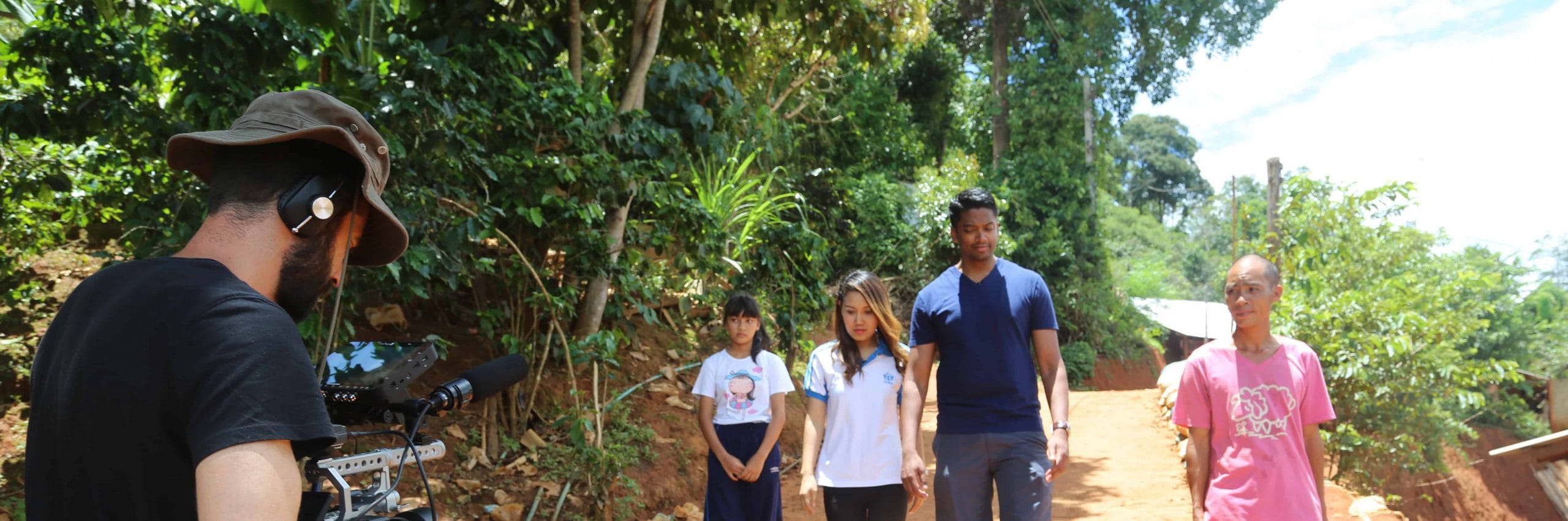
A Pim no le hace gracia ver a su padre. La chica de 14 años evita nerviosamente el contacto visual y sus pequeñas manos revolotean como pájaros de alas rotas. Pasa el peso de una pierna a la otra, se muerde el labio y sopla un mechón de pelo que le cae sobre la frente. El mechón cae de todos modos y le tapa uno de sus ojos, tan celosamente guardados.

Para ser una chica que regresa a su hogar y con su familia, se comporta menos como una niña que se reencuentra con los suyos y más como una prisionera a la espera de sentencia. En cierto sentido, eso es exactamente lo que es.
“Dice que no puede enfrentarse a ella ahora mismo”, traduce Joy.
Es una buena noticia. Significa que Pim puede volver al refugio donde ha vivido durante siete años, donde sus amigos, sus cachorros, sus gallinas y sus clases de guitarra la esperan para darle la bienvenida. Es una buena noticia, pero viene envuelta en ese tipo de tristeza que ningún niño se merece. Porque, aunque ella desea con todas sus fuerzas volver al albergue, sin duda hay una parte de ella que desea con todas sus fuerzas que su padre la reciba en casa.
Tal vez la mejor noticia sería que Pim ya no tiene que temer a su propia familia y a su comunidad. Tal vez la mejor noticia de todas sería que el mundo en el que nació Pim ya no permitirá que las jóvenes sean reducidas a mercancías sexuales.
Pero no es así. Pim sigue viviendo en un planeta en el que, en la actualidad, más de 20 millones de personas son víctimas de la trata con fines de explotación sexual comercial o de trabajo forzoso, por lo que tendrá que conformarse con lo que pueda conseguir.
En el trayecto de vuelta al refugio, Pim vuelve poco a poco a ser la chica que conocí unos días antes, cuya mirada brilla con risas y cuyos labios revelan un atisbo de picardía juguetona. Por ahora, la amenaza de ser vendida como esclava ha quedado atrás.
Al acercarnos a «Keep Girls Safe», una casa espaciosa y amplia escondida en Chiang Rai, Pim pega la cara al cristal y sonríe. Varias de las 30 niñas que consideran este refugio su hogar salen corriendo hacia el coche y se agolpan alrededor de las puertas. Pim sale del coche y ellas la envuelven en ese tipo de abrazo que solo un grupo de niñas felices puede crear. Pim ha vuelto.

Si el hogar es un lugar de familia, risas y seguridad, entonces el centro de acogida «Keep Girls Safe» es el único hogar que Pim ha conocido jamás. Aquí se cuida de su corazón, se le da una educación y se preserva su inocencia. En una sociedad en la que a las niñas se las valora a menudo por la cantidad de dinero que pueden obtener mediante el trabajo forzado y los actos sexuales, esto último es un regalo especialmente poco común.

«Keep Girls Safe» hace lo que gran parte del mundo no quiere o no puede hacer: ofrecer a todas las niñas una infancia segura y feliz. Las que viven aquí disfrutan precisamente de eso. Crían peces y pollos, tocan instrumentos musicales, cultivan frutas y verduras, aprenden bailes tradicionales y se acurrucan con los tres cachorros que viven allí. También aprenden a leer y escribir y matemáticas, entre otras habilidades, para que, cuando salgan del refugio, puedan vender su inteligencia en lugar de su cuerpo.
Aunque el mundo en general puede ser depredador e inseguro, aquí se mantiene a raya gracias al cacareo de las gallinas, los ladridos de los cachorros y las risas de 30 niñas felices y protegidas.