Au cœur du village de Bau, niché dans les montagnes escarpées de la province de Bau, je m'appelle Zainab Jajan Shikan. À 36 ans, je suis mère de quatre enfants et ma vie est un témoignage de résilience et d'espoir. Je suis mariée et profondément enracinée dans ma communauté, où je m'efforce de trouver un équilibre délicat entre les soins à apporter à ma famille et la tâche ardue de fabriquer du charbon de bois à partir de bois collectés. Cette activité est le principal moyen de subsistance de nombreux habitants de notre village.
Ma routine quotidienne va au-delà du simple labeur de la fabrication du charbon de bois. Il s'agit d'un voyage qui m'entraîne dans une randonnée sans relâche d'une heure et demie jusqu'au barrage de Bau, la principale source d'eau de notre village. Il ne s'agit pas d'une marche ordinaire, mais d'une expédition audacieuse, pleine de risques, qui traverse des terrains traîtres, tout cela dans le but de sécuriser cette ressource cruciale. Chaque pas que je fais me rappelle brutalement les difficultés endurées par d'innombrables personnes de notre communauté qui luttent pour accéder aux biens les plus essentiels. Pourtant, je persévère, poussée par une force inébranlable au plus profond de mon âme.
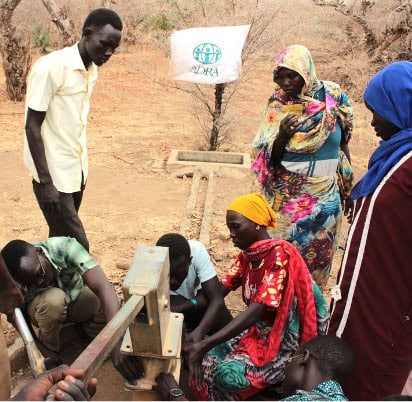
Au milieu de ces défis, un désir ardent de faire la différence dans ma communauté alimente mon esprit, en particulier lorsqu'il s'agit d'améliorer l'accès à l'eau potable. Désireuse d'acquérir les connaissances et les compétences nécessaires à l'entretien et à la réparation des pompes manuelles - un atout inestimable dans notre village - j'ai contacté le chef de la communauté afin de participer à un atelier de formation sur la remise en état des pompes manuelles. Malheureusement, ma demande initiale est restée sans réponse, laissant mes aspirations en suspens.
Cependant, une lueur d'espoir est apparue lorsque ADRA Soudan, par le biais du projet RAWA-USAID, a lancé un appel à candidatures pour la formation d'un comité d'usagers de l'eau (WUC). Saisissant cette occasion en or, j'ai exprimé mon enthousiasme inébranlable pour participer à l'atelier de cinq jours qui s'est tenu dans le village de Fadameia. L'atelier, axé sur la gestion des ressources en eau et la réhabilitation technique, était une lueur d'espoir - une chance de transformer ma vie et celle des autres.
Armé de kits de pièces détachées généreusement fournis par ADRA, je suis retourné dans mon village non seulement en tant que participant, mais aussi en tant qu'annonciateur de changement. L'atelier avait allumé un feu en moi, m'imprégnant d'un nouveau sens de l'objectif et de l'autonomisation. Je me tenais debout, prête à apporter ma contribution aux côtés des membres estimés de la WUC, en appliquant mes nouvelles connaissances pour restaurer et faire revivre les pompes manuelles défectueuses dans mon village et au-delà.
Mais ma mission s'est étendue au-delà du domaine de la réparation. Je suis devenue une fervente avocate de la sensibilisation aux ressources en eau, éduquant inlassablement ma communauté sur l'importance vitale de la préservation de notre source de vie. Mon histoire illustre parfaitement la manière dont l'autonomisation et l'éducation peuvent permettre à des personnes comme moi (en tant que femmes) d'apporter des changements tangibles dans nos communautés. Mon parcours, qui m'a fait passer du statut de citoyenne préoccupée à celui de dirigeante communautaire habilitée, est imprégné de résilience, d'espoir et du pouvoir de transformation du soutien et de l'éducation. Il souligne le rôle indispensable de projets tels que RAWA, qui vont au-delà de la satisfaction des besoins immédiats et favorisent le développement durable en donnant à des personnes comme moi les moyens d'agir.
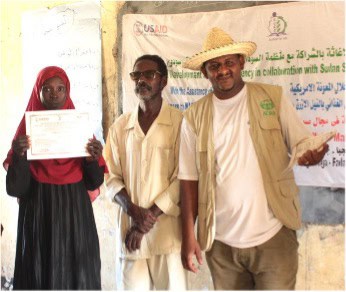
Mon histoire n'est pas seulement la mienne ; elle fait écho à celle d'innombrables femmes à travers le monde qui, lorsqu'on leur en donne la possibilité, peuvent contribuer à façonner l'avenir de leur communauté. Je voudrais exprimer ma gratitude au projet ADRA-USAID pour avoir donné la priorité à l'égalité des sexes dans la conception de ses activités. Je vous remercie de reconnaître l'importance de l'inclusion et de veiller à ce que les femmes et les hommes aient les mêmes possibilités de participer aux initiatives du projet et d'en bénéficier.
Ainsi, alors que je me tiens ici aujourd'hui, fière de mes réalisations et de l'impact positif que j'ai eu, je vous invite à vous rappeler qu'en chaque personne réside un potentiel de grandeur. Il suffit d'une étincelle d'autonomisation pour que le monde change à jamais.
C'est mon histoire, celle d'un triomphe sur l'adversité, une histoire d'espoir qui continue à se dérouler chaque jour.