“Wenn ich meiner Geschichte einen Titel geben müsste, würde ich sie ‘ASOTRY verändert Leben’ nennen”, sagt Ravoahanginirina Marie Claudine, eine 31-jährige verheiratete Mutter von drei Kindern.
Sie wird Voahangy genannt und lebt im Dorf Ambato Mitongoa Tambohobe in der Gemeinde Anjoma, Madagaskar.
Voahangy verließ die Schule in jungen Jahren, weil sie es sich nicht leisten konnte, weiter zur Schule zu gehen, und sie hatte Mühe, eine feste Arbeit zu finden. “Um ein wenig Geld zu verdienen, trug ich die Waren der Leute auf dem Kopf und lief 5 bis 10 km in die Gemeinde Anjoma”, sagte sie. “Ich habe es auch mit kleinen Geschäften versucht, aber selbst dann war es schwer, jeden Tag genug zu essen zu finden.”
Im Jahr 2015 begann das von USAID finanzierte und von ADRA durchgeführte ASOTRY-Projekt in ihrem Dorf zu arbeiten. Motiviert, neue Fähigkeiten zu erlernen, schloss sich Voahangy dem Projekt als leitende Mutter in seinem Gesundheitsprogramm an.
“Nach der Schulung bestand meine Aufgabe darin, das Gelernte an andere Mütter weiterzugeben, insbesondere in Bezug auf Ernährung und Hygiene”, erklärte sie. “Sie wussten die Unterstützung zu schätzen. Einige sagten sogar, dass ihre Kinder ohne diese Ratschläge vielleicht nicht überlebt hätten.”
Als Landwirtin ergriff Voahangy auch die Initiative. Sie schloss sich mit 17 anderen Landwirten zusammen und gründete die Gruppe “Farmer Field School Miray Hina”, zu deren Präsidentin sie gewählt wurde.
“Wir haben durch den FFS neue Techniken für Ackerbau und Viehzucht gelernt”, sagte Voahangy. “Vor dem ASOTRY-Projekt haben wir traditionelle Methoden angewandt. Mit 5 kg Erdnusssamen konnte ich zum Beispiel nur 30 Kapoaka (Dosen) ernten, selbst mit chemischen Düngemitteln. Mit verbesserten Methoden wie der Kompostierung kann ich jetzt bis zu 120 kapoaka ernten. Auch meine Reisproduktion ist gestiegen - von einer Tonne auf mehr als drei Tonnen, selbst auf einem kleinen Feld.”
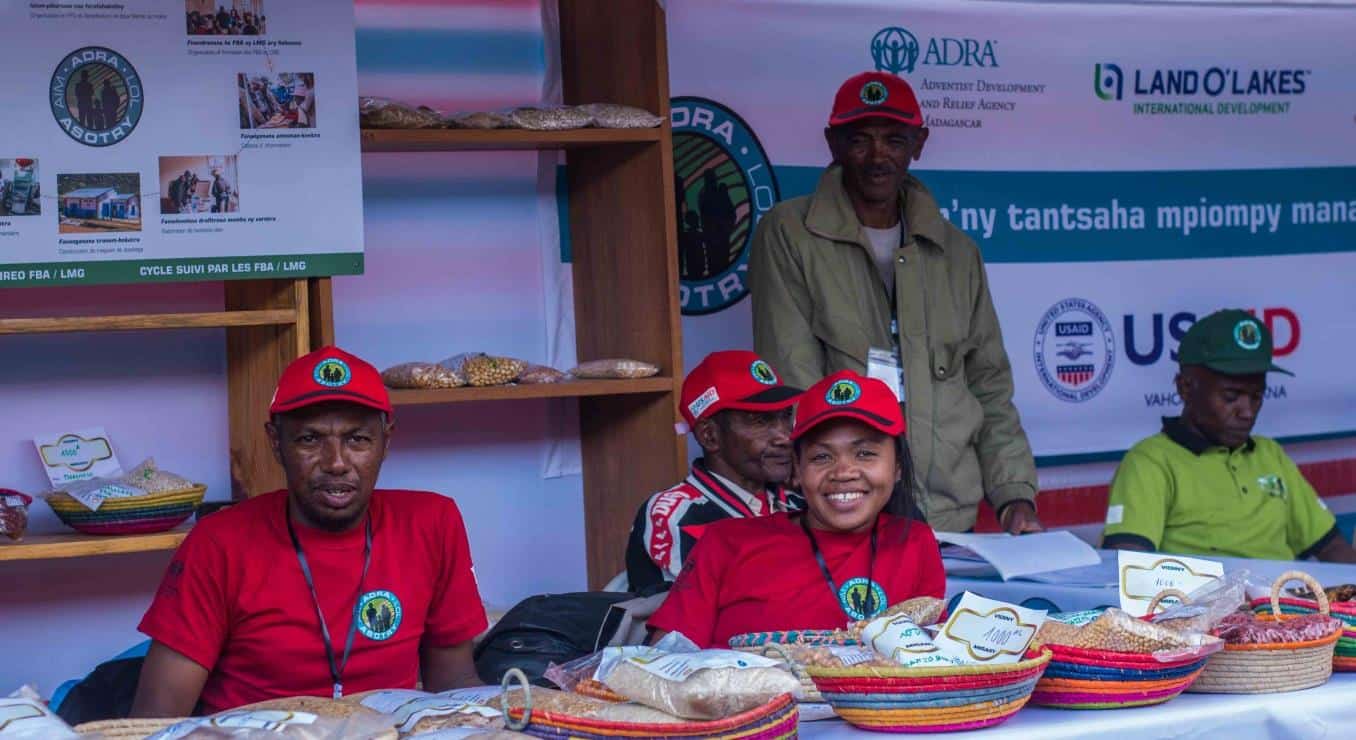
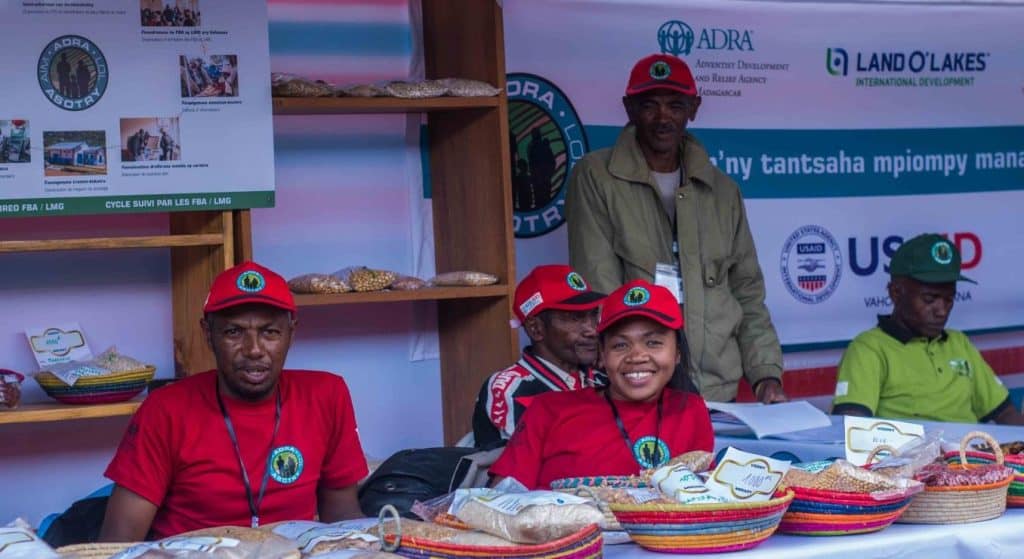
Ihre Gruppe, FFS Miray Hina, wuchs später zu einer Farmer Business Association (FBA) heran, und Voahangy wurde erneut zur Vorsitzenden gewählt. “Die Zugehörigkeit zur FBA hat viele Vorteile mit sich gebracht”, erklärt sie. “Wir haben an der nationalen Messe FIER MADA 2018 in der Hauptstadt Antananarivo teilgenommen, was uns geholfen hat, größere Märkte zu erschließen. Im Rahmen des Projekts erhielten wir auch ein Telefon und lernten, wie wir unsere Produkte auf Facebook bewerben können. Obwohl wir in einer abgelegenen Gegend leben, können wir jetzt leichter auf Marktinformationen zugreifen.”
Neben der Landwirtschaft betreibt Voahangy auch eine Geflügelzucht. “Anfangs hatten die Leute Angst, Hühner zu züchten, weil sie das Risiko von Krankheiten sahen”, sagt sie. “Nach der Schulung wurde ich Community Livestock Worker. Ich kümmere mich um die Gesundheit der Tiere, indem ich die Hühner impfe und entwurme, und ich unterstütze andere Landwirte bei der Anwendung verbesserter Techniken. Dank dieser Fähigkeiten habe ich jetzt 250 Hühner.”
Voahangy engagiert sich auch für ihre Gemeinde. Sie leitet eine dörfliche Spar- und Darlehensgruppe (Village Savings and Loans, VSL), die den Mitgliedern hilft, zu sparen und in ihre Unternehmen zu investieren. “Als Präsidentin unserer VSL verwende ich meine Ersparnisse, um hochwertiges Saatgut für die Landwirtschaft zu kaufen”, sagt sie.
Neben ihren vielen Aufgaben als leitende Mutter, Bauernführerin, Genossenschaftspräsidentin, Viehzüchterin und VSL-Leiterin ist Voahangy auch eine zertifizierte ASOTRY-Alphabetisierungslehrerin. Schritt für Schritt hat ihr Engagement im Projekt das Leben ihrer Familie verbessert.
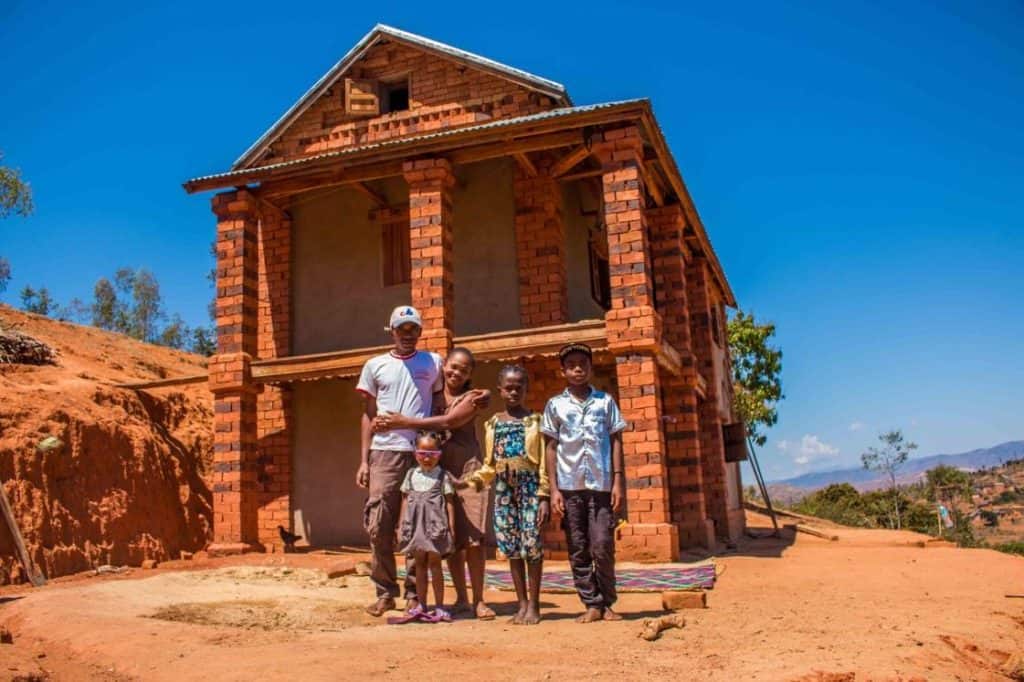
Anfang 2017 begann sie, Lehmziegel zu sammeln, um ein neues Haus zu bauen. Der Bau begann im November 2017, als alle Materialien fertig waren.
“Dank der Unterstützung durch das ASOTRY-Projekt konnten mein Mann und ich unser Haus bauen”, sagte sie. “Als die Gemeinde davon erfuhr, meldeten sich 120 Menschen freiwillig, um beim Tragen von Ziegeln zu helfen, als Zeichen der Unterstützung. Ich war von ihrem Enthusiasmus so berührt. In weniger als einem Monat war das Haus fertiggestellt - etwas, das wir in diesem Dorf noch nie gesehen hatten.”
Voahangy hofft nun, dass sie in naher Zukunft ein Lagerhaus bauen kann, um ihre Ernte zu lagern.